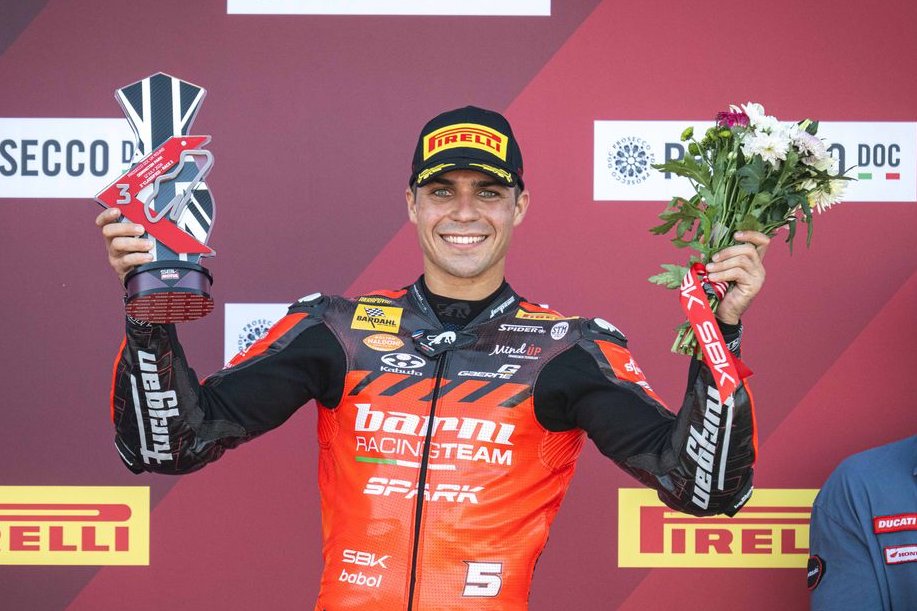
Álvaro Bautista: Rollercoaster of a world champion (Part 1)
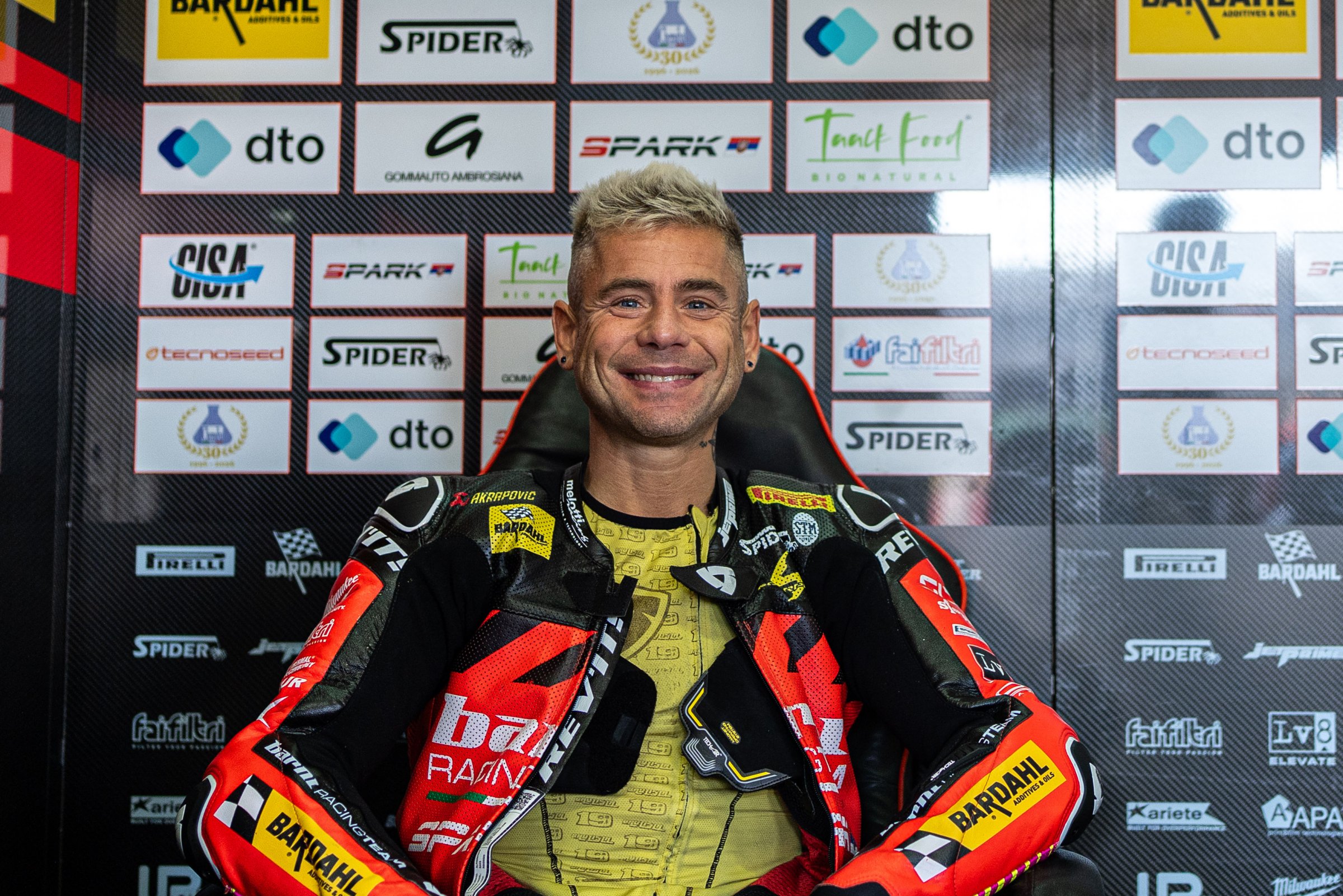
More than twenty seasons competing on the world stage, plenty victories and podium finishes and three world chamopionship titles, including one in the 125cc World Championship and two in the WorldSBK. This is Álvaro Bautista.
Today, Bautista is 41 years old, but he still has a strong desire to race and continues to compete in the Superbike World Championship with the Barni Spark Racing Team. Besides being one of the main names in the WorldSBK field, the Spanish rider is one of the most remembered names in international motorcycle racing over the past 25 years, thanks to the achievements mentioned above and also to his strong performances in MotoGP: between 2010 and 2018, he scored three podium finishes and many top ten results, despite never having a bike that enabled him to fight for the win.
Palmen in Motorradsport had the opportunity to interview Bautista and speak with him about a wide range of topics, covering both present and past, as well as Grand Prix racing and World Superbike. Here is Part 1, in which we discuss the 2026 season, his years in the Spanish championshipsand his time in the 125cc and 250cc classes.
Álvaro, what can you say about the 2026 season?
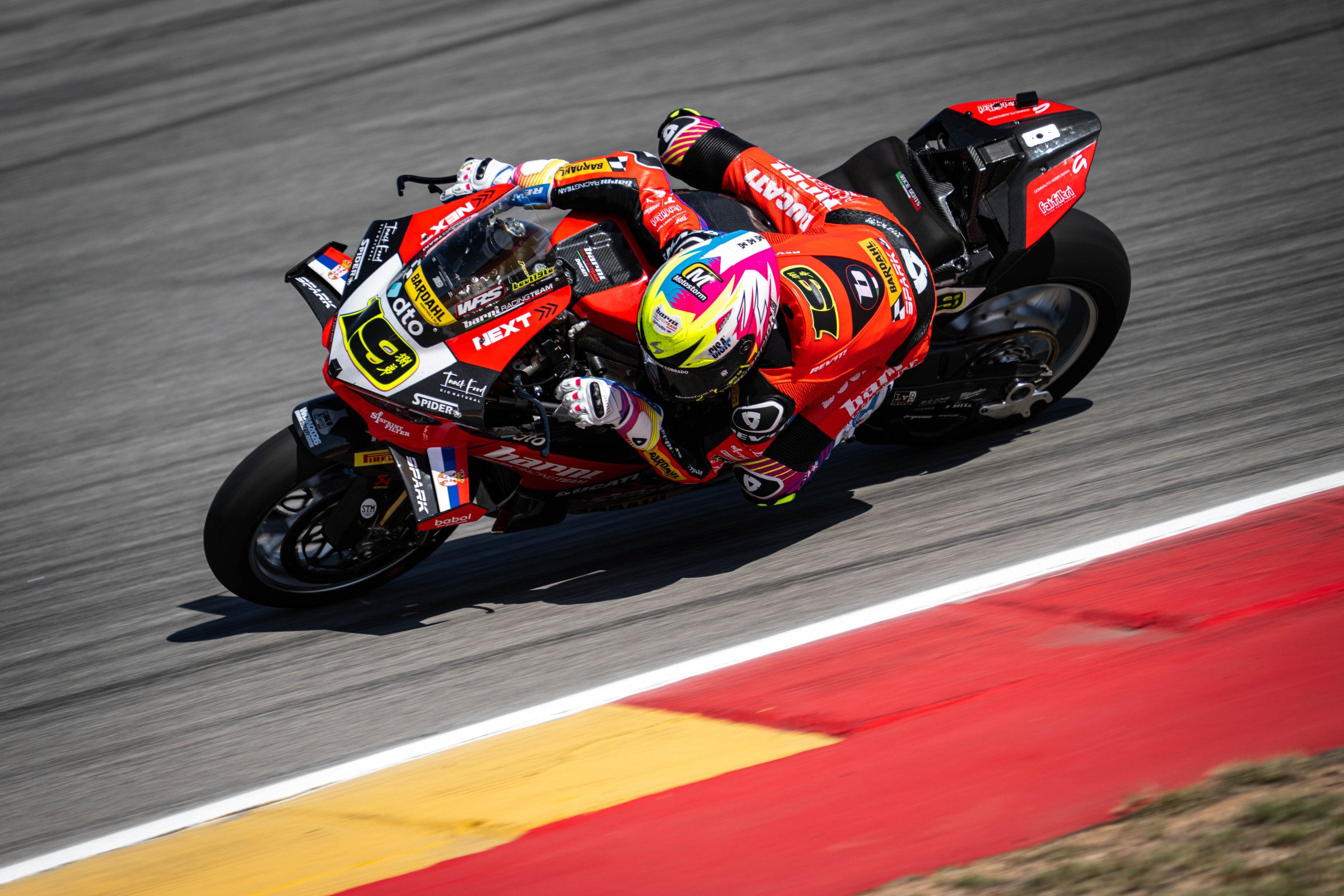
It started with a lot of work, due to moving to a different team and to the new Ducati machine. Unfortunately, we were not able to do much during the winter, because it rained almost all the time at the tests, so we had to wait for the first rounds of the season to continue the adaptation process. The start of the season was probably more difficult than we expected, because I am working with different people and it's not easy to start from scratch and immediately understand each other perfectly. As I mentioned, we have also switched to the new model of Ducati Panigale V4R, and there are some differences compared to the bike we used until 2025.
Little by little, we are putting all the pieces in place, and our goal is to keep improving and reach our full potential. With basically no winter testing, we have to use race weekends to try different solutions. Of course, some of them work and some don't, but we will continue working to get as close to the front as possible, despite the disadvantage of the minimum weight rule.
What differences have you found working with a high level, but still independent team such as the Barni Spark Racing Team, compared to the factory team you came from?
More than in the team itself, the difference is in the people. At the Aruba.it Racing Team I always worked with Giulio Nava, who was my crew chief for many years (now working with Andrea Locatelli, ed), and I knew all the mechanics very well. Sometimes, a glance was enough for us to understand what we needed. With my new engineer, Luca Minelli, we still need a bit more time, but in general I feel I have great support despite being in an independent team, also when it comes to data analysis and sharing.
And what are the main differences between the new Ducati Panigale V4R and the previous model?
From a chassis perspective, they look the same, but they are not. In addition, with the new swingarm, the bike behaves differently in terms of balance. There is a bit more contact with the rear wheel, and that also affects the front end. We need to find the right balance in order to put the correct load on the tyres. We are not quite there yet, but we are working on it.
After talking about the present, let's take a big step back and focus on your career. Shall we start from the Movistar Activa Joven Cup?
It was a revolution, because nothing like that had existed before. I remember that a huge number of riders applied to take part in the selection event, and in the end around 400 were chosen. The selection event later took place at Jarama. We would all go out on track, and if you were selected for the next stage, they would call you and ask you to return to the circuit. Finally, out of 400 riders, they selected 25 and some of them were myself, Dani Pedrosa, Raúl Jara, Joan Olivé and Julián Simón.
For me, it was my first experience on a Grand Prix motorcycle. Before that, I had been racing in a 50cc series, and moving to a 125GP bike was an incredible feeling. On top of that, I learned a lot thanks to Alberto Puig, as he was always giving us advice on how to ride and manage races. Those years, 1999 and 2000, were crucial for my growth.
Then you moved up to the Spanish CEV 125 Championship.
Yes, but not with Movistar. Puig also had a team in the CEV, and from the Movistar Cup they promoted Dani Pedrosa, Joan Olivé and Raúl Jara. Unfortunately, I was not selected, so I had to follow a different route to reach the Spanish Championship. I spent another year in the Movistar Cup and then, in 2001, I moved into the CEV with a very small team: myself, my father and a few friends. We have very limited resources and, in fact, halfway through the season I was close to quitting because we had run out of budget.
Then I received a call from the By Queroseno Racing team. Their rider was Daniel Piñera, who had also won the Movistar Cup in 2000, but they had parted ways midway through the season due to poor results. The team contacted me and said that if I could bring the budget they needed, I could finish the season with them. Thanks to a loan and the help of some friends, we made it. As soon as I got on the bike, I immediately achieved good results. The team owner, Raúl Romero, then became my manager and found me another opportunity.
And what can you say about the 2002 season?
I joined the team sponsored by Atlético de Madrid, and that year I finished second in the championship behind Héctor Barberá, who was already competing in the World Championship with the Aspar team and was kind of a factory rider. The most special moment, however, came in May 2002 when I made my debut in the 125cc World Championship at Jerez. In the middle of 2001, I nearly quit racing, and just one year later I was in the World Championship as a wildcard. It was a dream come true.
Then, as we know, Clarence Seedorf created a team to compete in the 125cc World Championship, and they chose me as their rider. That's how I arrived in the MotoGP paddock in 2003. I faced many obstacles along the way, from not being selected for the Movistar team to nearly having to quit because of lack of funding, but fate wanted me to get there. And in the end, I made it.
How were your first years in the World Championship like?
We improved steadily with Seedorf Racing. In 2003 we were a non-factory team and used Bridgestone tyres, but in 2004 the team signed Héctor Barberá and together we achieved some excellent results, including my first World Championship podiums: second place in Great Britain and two third-place finishes at Lusail, Sepang and Valencia.
However, 2005 turned out to be a tough year for you.
In theory, I was supposed to be the one to beat in 2005, but the team switched from Aprilia to Honda and then we were never in a winning position. It was an extremely tough year for me (only three top-10 finishes, ed), and by the end of the season many people even thought that my career was over. Deep down, I knew the problem was the bike and the fact we simply couldn't make it work, but at a certain point I also started wondering whether the problem was actually me.
I asked my father, who has always supported me throughout my career, whether I should speak to a psychologist. And you know what happened? He got angry and told me: "You need a bike and a team that help you win, not a psychologist!". Then, in 2006 I joined the Aspar Team, I won the very first race of the season, and he came to me and said: "See? The best psychologist in the world is a motorcycle you can ride at best and win with". And he was right.
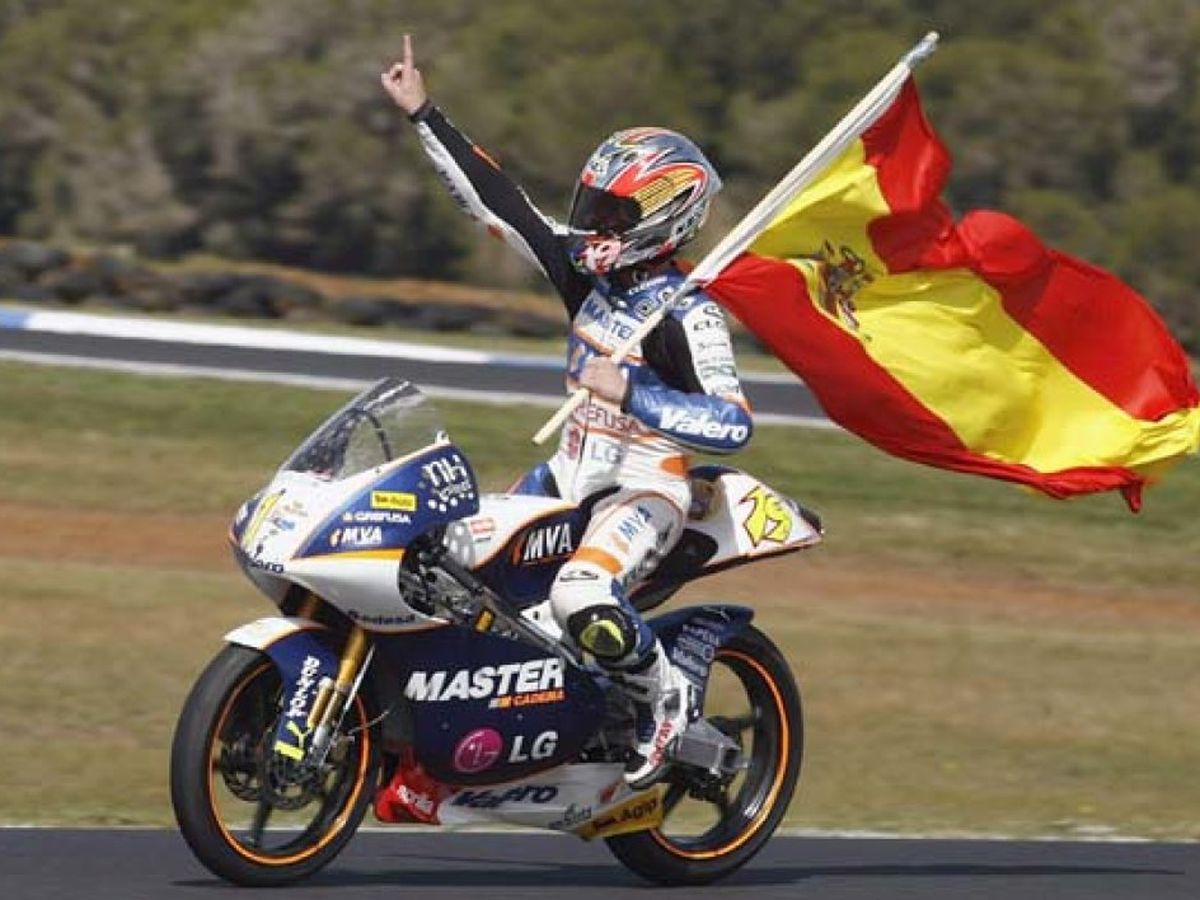
In the end, you not only won the opening race of the season, but also several more races and the world championship title. What are your best memories of 2006?
Winning the world championship itself was obviously fantastic, but one of my fondest memories, not only from 2006 but from my entire career, is that victory in the opening race of the season. We were at Jerez, a very special track for me, and my whole family and many friends of mine were there. Winning was incredible, because only a few months earlier, people were saying that I was done.
Then came three seasons in the 250cc class, still with the Aspar Team. What do you remember from that time?
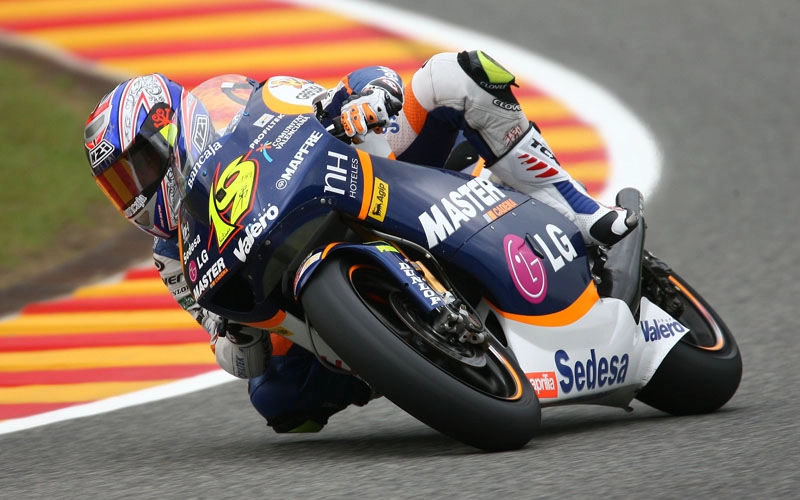
The best memory is my first year in the class, in 2007, because as a rookie I found myself fighting against riders such as Jorge Lorenzo, Andrea Dovizioso, Alex De Angelis and Héctor Barberá. In my debut season, I was battling for podiums and victories against incredibly strong riders, who already had experience in the category. And I also managed to win races against them! (at Mugello and Estoril, ed). I had several crashes as well, mostly due to lack of experience, but I was extremely happy with that season.
Even though I fought for the title against Marco Simoncelli in 2008, I still consider 2007 as one of my best years in Grand Prix racing.
About 2-stroke bikes, do you think they taught riders much more than Moto3 and Moto2 do?
In my opinion, the 125cc and 250cc classes were much more "educational". There were no electronic aids, so you could really see who was talented and who was not. Back then, you had to control the throttle and the power entirely with your right wrist. You also had to know exactly when and how to brake, because there was no engine braking, and you had to use the clutch when shifting down through the gears. In general, two-stroke motorcycles taught riders much more.
Even though every era has its own bikes and categories, I think two stroke racing showed the true talent of a rider. Nowadays, with so much technology and electronics, everything is more balanced and it's difficult to know who is really the strongest, although these modern bikes are certainly not easy to ride either. I also remember the first time I tested a MotoGP bike. It was incredibly fast, of course, but it felt strange not to have total control over the bike, because of the electronics.
Read the Part 2 of the interview.