Álvaro Bautista: Rollercoaster of a world champion (Part 2)
The opportunity to interview a rider like Álvaro Bautista is rare and far from easy to achieve, even for the main media outlets. However, Palmen in Motorradsport was able to do it, and it was a great opportunity to gain a deeper understanding of the multiple world champion from Spain and his journey.
While in Part 1 we focused on 2026 and his early years in Grand Prix racing, in Part 2 we instead discuss Bautista’s seasons in MotoGP and World Superbike, including achievements and more demanding times. Room is left also to talk about the media, the future and his daughters.
Álvaro, in 2010 you arrived in MotoGP with Suzuki and later raced for the Gresini Racing team, first on a Honda and then on an Aprilia, as well as riding the Ducati for the Aspar team. What do you say about your years in MotoGP?
In 2010 I moved up with Suzuki, which was a factory team, but it was still running at the back most of the time and using Bridgestone tyres. Then we worked hard and improved a lot especially in the second year, when they started bringing me some stuff I had requested, and together we reached the point where we could fight for top five positions. Then MotoGP announced it was returning to 1000cc engines, and Suzuki decided to withdraw. Therefore, I had to find a new seat and eventually secured one with the Gresini Racing team.
In general, I feel that in MotoGP I never had the right bike at the right time. After Suzuki, I almost always rode for satellite teams, when there was still a huge difference between factory teams and satellite teams. This was also clear in 2018 when I replaced Jorge Lorenzo at Phillip Island on the factory Ducati. I didn’t know the bike, and it was different from the one I had at Aspar Team, but I was immediately fighting for the podium.
In MotoGP I never had the chance to fully show my potential and fight for the title. That’s just how it turned out.
And what are your best memories from that period?
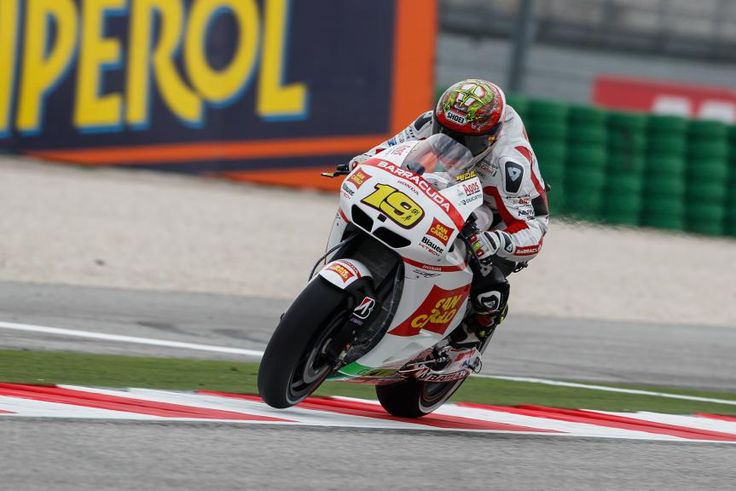
The podiums I achieved (three, all with Gresini Racing, ed), many battles with Valentino Rossi, and finishing fifth in the championship and as best non-factory rider in 2012, with Gresini. I remember my first MotoGP podium in 2012 at Misano. I finished third, beating Andrea Dovizioso in a photofinish, and stood on the podium alongside Jorge Lorenzo and Valentino Rossi. It was incredible, because all the fans gathered under the podium, and at one point you could barely even see the track because of the crowd. A moment like that is unforgettable for a rider.
At a certain point, however, you remained out of MotoGP and moved to the Superbike World Championship in 2019. How did you experience that change?
I didn’t want to come to Superbike. When you are in MotoGP, you tend to think of Superbike as a step backwards. At that moment, however, I still felt I had something to prove, and honestly I didn’t want to go to Moto2. So I accepted Ducati’s offer for the WorldSBK, hoping to enjoy racing again. And, in the end, I’m very happy to be here.
I don’t think Superbike is a lower level than MotoGP at all. It’s simply a different championship, with different bikes and tyres. I immediately felt very comfortable and finally enjoyed motorcycle racing again, giving my maximum and winning. It’s a championship that is growing, and more and more MotoGP riders have stopped seeing it as a "lower league". They’ve understood that it’s simply another championship, still of a very high level and often delivering more spectacular racing than MotoGP. Actually, in MotoGP it's now harder to see great battles, due to all the technology and aerodynamics added during the last years.
And what can you say about the years you have spent so far in WorldSBK?
In 2019 I arrived and immediately started winning many races (11 in a row, ed). I can’t even really explain why I was so fast straight away. I simply had a great feeling with the bike. However, we lost that feeling in the second half of the season, when I started crashing and we made more mistakes, ultimately losing the championship. Perhaps at that time I lacked experience with the category, the bike, the Pirelli tyres and some circuits I didn’t know. Still, we were fast and I realised I could still achieve great things.
Then, in 2020 and 2021, I took a gamble on Honda HRC’s proposal to build a winning WorldSBK team, with both a new bike and a new team. The problem was that perhaps there were too many new things all at once. Although we achieved some good results and a few podiums, the level of the bike at that time was low and we also had a lot of work to do to develop it.
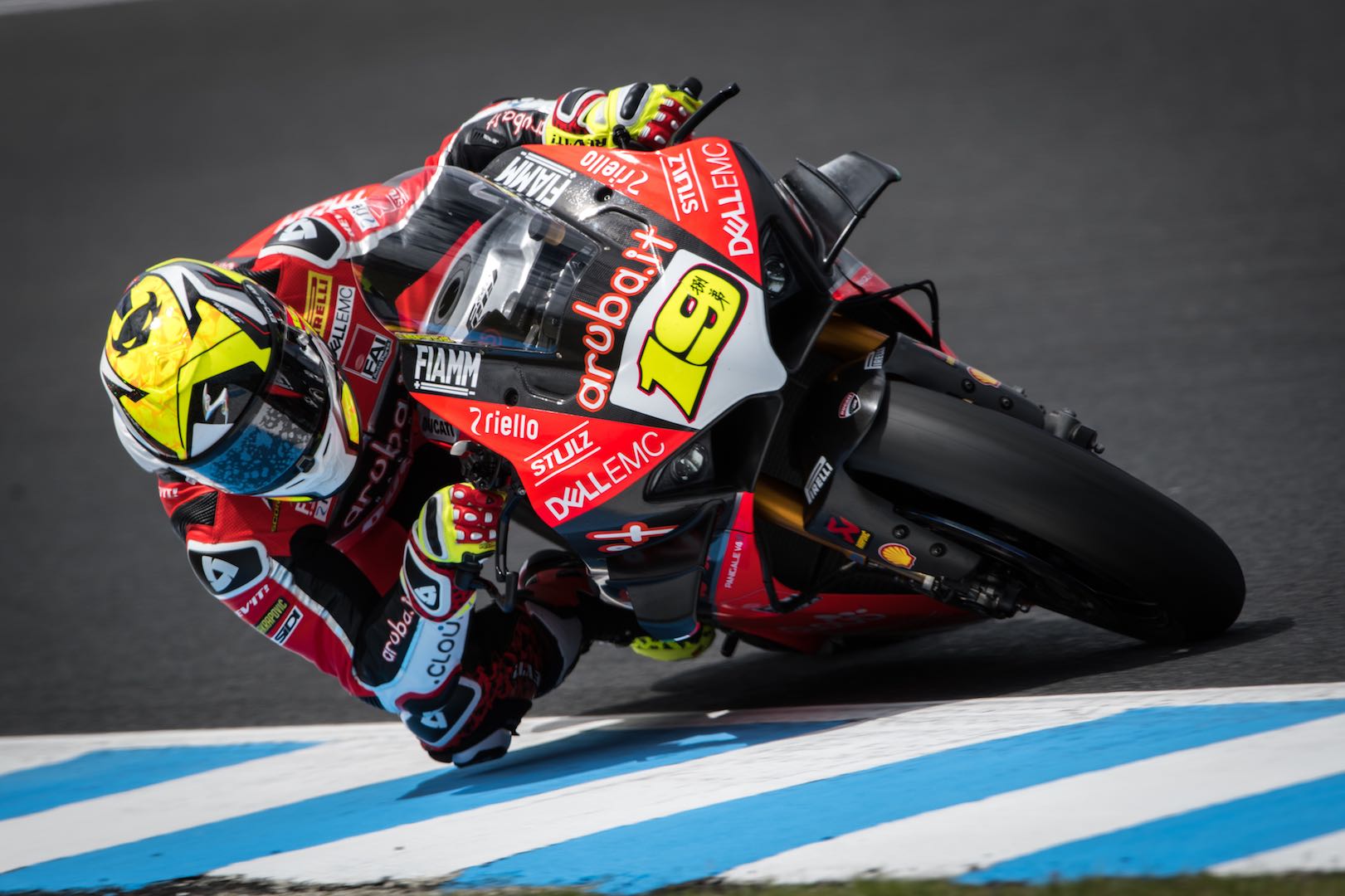
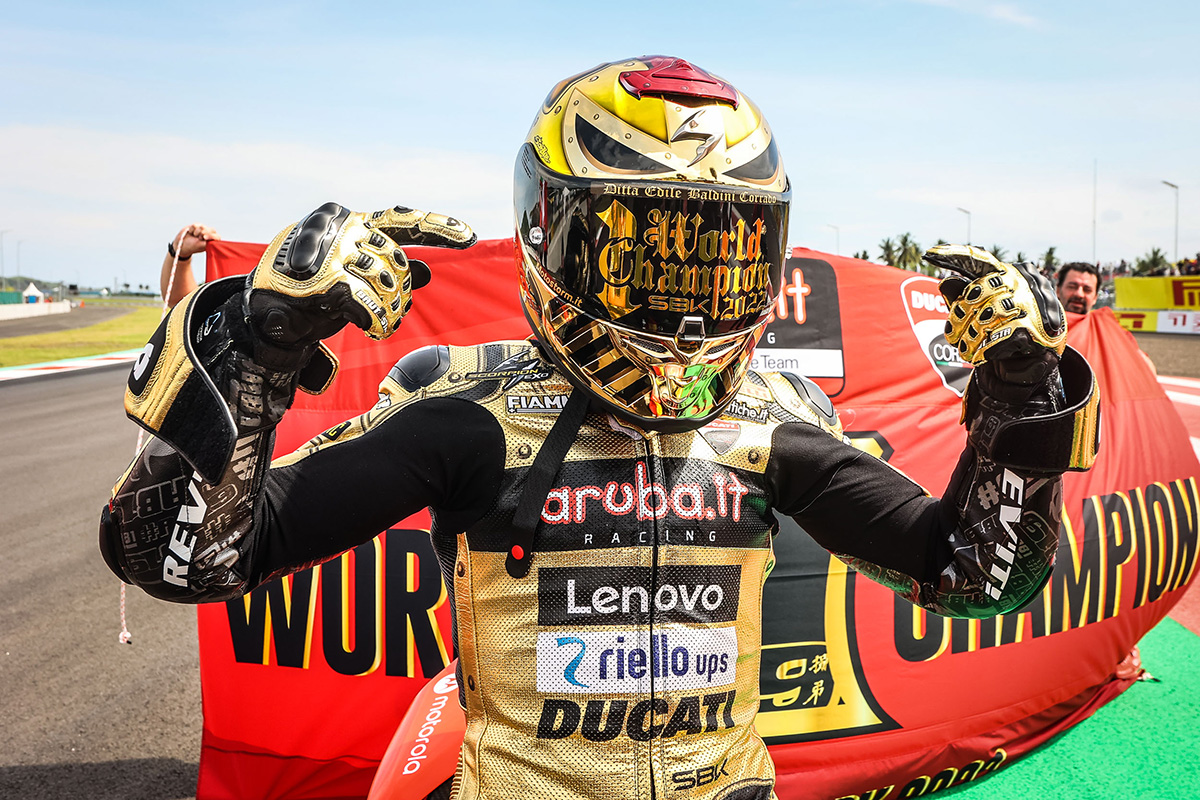
It later became clear that I wasn’t the problem because when I returned to Ducati, with a better understanding of the championship, I was immediately at the front and won the title in both 2022 and 2023. I also beat Jonathan Rea and Toprak Razgatlioglu in both years, so you can say anything except that it was easy. On the contrary, I had to work very hard for it.
That brings us to the most recent years, in which you have been fast but not fighting for the title.
That’s because, in 2024, they introduced the minimum weight rule, which with these bikes doesn’t balance the performance, but instead penalises short and lightweight riders like me. Take Dani Pedrosa as an example. He was incredibly fast in 125cc and 250cc, but then struggled in MotoGP because he was riding a much bigger and more powerful bike, which is more difficult for riders like us. Well, now a Superbike weighs 11 kg more than a MotoGP bike by regulation (168 kg against 157 kg in MotoGP, ed). Adding the 7 kg of ballast that I have to carry, in my case we reach a total of 18 extra kilograms. I already struggled with the Superbike because of its size and weight, but now it’s really difficult.
If you look at the races, when I beat Rea and Razgatlioglu, I usually did it by pulling away in the final laps, because I managed the tyres and the overall situation better. But I never dominated from start to finish, because at the beginning of the races I struggled with a full fuel tank. Now it’s even worse, because at the start of a race I’m no longer even a rider, but kind of a passenger. That’s dangerous for me, because I can crash more easily, but it’s also dangerous for other riders, because I could involve them in my crashes.
In recent years I finished third in the championship, but I was behind a rider benefiting from concessions (Toprak Razgatlioglu with BMW, ed) and behind my teammate, who is not penalised (Nicolò Bulega, ed). In reality, I have consistently been the best rider affected by this rule, still taking wins and many podiums. Today, even when we do the best possible job, fighting for victory is extremely difficult. At most we can fight for a podium, but winning is practically impossible.
Moving to media, how do you deal with social media?
I come a bit from the “old school”, from a time when social media wasn’t yet popular, so in some ways it’s still something new for me. In general, I think people perhaps used to speak in a more politically correct way, but I’ve learned that you always have to tell the truth, which is what I do now. That also applies to social media, which is important for helping people understand my situation.
At the same time, I try not to give too much importance on what people say about me on these platforms, because many people speak without knowing the facts or say things they would never say to your face. I tell the truth regardless, and whether people like it or not is fine with me.
At this stage of your career, what goals do you still have?
I don’t feel as old as my ID card says, but I admit that I don’t have any particular goals in terms of achievements or results. I keep racing because I genuinely enjoy it, I feel good physically and mentally, and I stay fit. Sometimes even my father asks me why I keep going instead of retiring. He says: “Why do you continue if you’re penalised? You’ve already won races and championships and given people lot to enjoy. You can stop now.” But the truth is that I love motorcycles, I love racing and I enjoy challenges. That’s why I still want to continue racing despite my age.
In conclusion, you are father of two daughters (Olympia and Gina, ed). How do they experience your career as a rider?
Sometimes they ask me why I have to travel so much instead of staying with them (laughs, ed). Apart from that, they support me a lot. It also makes me happy when they come to the races and, when I reach the podium, they ask me: “What number did you get today? One, two, or three?”.
I’ll say even more: if they wanted to become motorcycle racers themselves, I would support them completely. Maybe when the time comes I’ll be scared and change my mind, but today I can say that if they wanted to become riders, I would help them in every possible way.
Palmen in Motorradsport thanks Álvaro Bautista for his availability and Silvia Redaelli (Barni Spark Racing Team Press Officer) for arranging the interview and making it possible. Best wishes to both the rider and the team for the upcoming races and seasons.