This is SPRINTflation, baby!
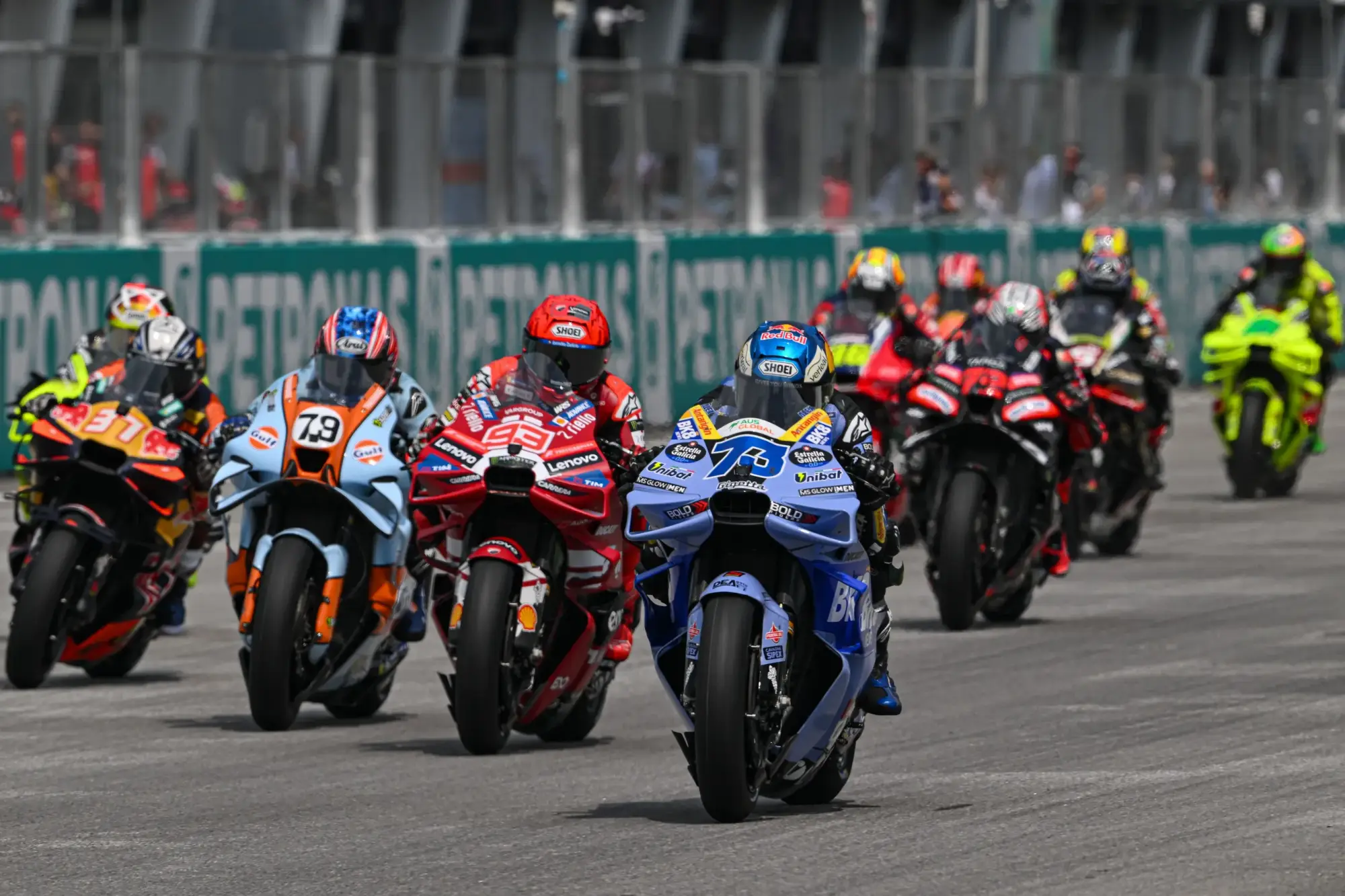
In recent years, however, a lot of things have changed.
Less time for Free Practice
The actual free practice sessions have now been reduced to just Friday morning's session and Saturday morning's 30-minute FP2 session, often held in different temperature and humidity conditions compared to the afternoon sessions. And what happens on Friday afternoon? We have the Practice session, whose purpose is rather to determine who goes straight Q2 than to give room to get ready for the race.
It's also worth pointing out that the length of free practice sessions has shrinked compared to the past. To prove this, here's a comparison with examples from 2014, 2022 and 2023. Links to the respective MotoGP World Championship regulations for each year are included.
| Duration of FP1, FP2 and FP3 (in minutes) | ||
| |||
Moto3 | 40’ each | 40’ each | Friday: 35’ + 35’ Saturday Morning: 30’ |
Moto2 | 45’ each | 40’ each | Friday: 40’ + 40’ Saturday Morning: 30’ |
MotoGP | 45’ each + 30’ FP4 | 45’ each + 30’ FP4 | Friday: 45’ + 60’ Saturday Morning: 30’ |
(for 2023 I mention only the day and not the name of the sessions, since it changed multiple times: Practice, Free Practice or two Free Practice sessions + one Practice)
To sum up:
- Moto3 lost 20 minutes of Free Practice time, going into 2023.
- Moto2 lost 25 minutes of Free Practice time, partly in 2022 and partly in 2023.
- MotoGP lost even 30 minutes of Free Practice time, from the 165 minutes available until 2022 to the current total of 135 minutes, in place from 2023 onwards
This is all coherent with what Stefano Domenicali said to Sky Sport MotoGP during the 2023 Portuguese GP: “Free practice sessions are interesting only for the engineers”.
Other things have changed in the meantime, such as the fact that, for a brief period, all (or almost all) free practice sessions were counted to determine which riders went directly to Q2. Now, as we know, only Friday afternoon's Practice session is taken into account. However, the essence of my analysis, which is purely about the amount of track time, remains largely unchanged.

Less time for Qualifying
When it comes to qualifying, the format has gradually evolved from a single session on Saturdat afternoon to the Q1-Q2 system we have today. The change was first introduced in MotoGP in 2013, before being extended to Moto3 and Moto2 in 2019.
When this format was also adopted in the lower classes, one of the stated goals was to prevent riders from waiting for each other to get a slipstream, often riding slowly on the racing line or even following another rider all the way back to the pits (I remember some bad things, such as one Moto3 qualifying session at Le Mans, and if I remember correctly it was in 2017). As we know, the problem is still there and it's never really disappeared...
What has disappeared, on the other hand, is some of the time previously allocated for qualifying sessions. Let's take 2012, the year before the Q1-Q2 system was introduced in MotoGP, and 2019, when the same format was adopted also for Moto2 and Moto3:
| ||
MotoGP | 60’ | 15’ Q1 + 15’ Q2 |
Moto2 | 45’ | 15’ Q1 + 15’ Q2 |
Moto3 | 40’ | 15’ Q1 + 15’ Q2 |
To sum up: MotoGP lost 30 minutes of track time for qualifying, while Moto2 and Moto3 lost respectively 15 and 10 minutes. This clearly applies only to riders who go through Q1 and manage to secure a spot for Q2: who hits the track for only either Q1 or Q2, has only 15 minutes available.
The qualifying sessions have become a mere Time Attack battle. When there was one Qualifying Practice session, or when even longer ago the QP sessions were two (one on Friday afternoon and one on Saturday afternoon), you could still test some alternative solutions or stuff like that.
The gradual vanishing of the Warm Up
The process of shrinking track time included also Sunday morning's Warm Up session.
The riders competing in Moto2 and Moto3 lost half of the Warm Up session in 2022, when it was shortened from 20 to 10 minutes. We then saw the final step immediately after: in 2023, the Warm Up session was cancelled for both classes. This was done to leave room for the entertainment initiatives organised (and imposed, just look at how they reacted to Marc Márquez not showing up for that go-kart race at Motegi) by Dorna/MSEG.
In MotoGP, the Warm Up was shortened from 20 to 10 minutes in 2023, as one of the changes introduced to the weekend format in that year. Moreover, as we know, from 2027, the Warm Up will also be removed from the MotoGP schedule. A short but still important session, allowing riders to fine-tune the final details ahead of the race, will disappear from the weekend programme altogether.
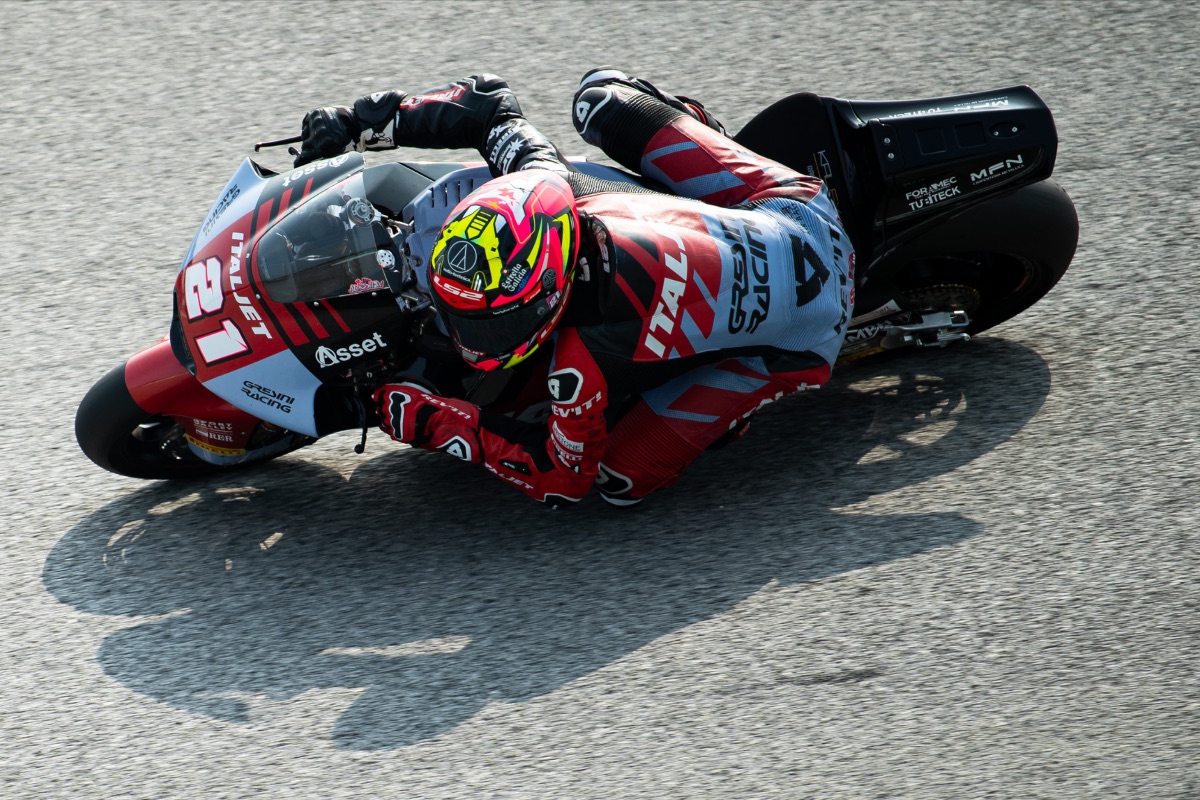
Races: Sprints... and more
Several things have changed on the Race side too. The most obvious thing, as we all know, is the introduction of the MotoGP Sprint Race on Saturday afternoon, after all the Qualifying sessions.
Another important change, however, has gone somewhat under the radar. Let's take three different Grands Prix as examples: Qatar, Italy and Germany.
| Sunday race distance (in laps) | |||||
| Lusail | Mugello | Sachsenring | |||
| Until 2022 | From 2023 | Until 2022 | From 2023 | Until 2022 | From 2023 |
Moto3 | ||||||
Moto2 | ||||||
MotoGP | ||||||
Looking at the time taken by the leading riders to complete the race distance, and considering dry races:
- Until 2022, Moto3 and Moto2 races lasted around 39 minutes each, while MotoGP races lasted about 41 minutes.
- Since 2023 onwards, a Moto3 race lasts around 33 minutes (six minutes less than before), while a Moto2 race takes approximately 35 minutes (four minutes less than before). MotoGP races, on the other hand, still last 41 minutes, exactly as they did in previous years.
In short, alongside the introduction of the Sprint Race, Moto3 and Moto2 races were shortened, while the duration of the main MotoGP race remained unchanged.
Summary
After looking at all these figures and changes, it's worth summarising the main points. We have:
- Shorter free practice sessions and less time to find the best setup.
- Qualifying increasingly reduced to mere Time Attack battles.
- More than 40 MotoGP races in a season, including both Sprint and main races.
- Shorter races for Moto3 and Moto2.
- Warm Up sessions being sacrificed for the sake of Riders Parade and entertainment events involving MotoGP riders, without ever including anyone from Moto2 and Moto3.
- One additional point: a huge amount of short-form video content produced for social media, almost entirely focused on MotoGP and with very little space given to Moto2 and Moto3.
We already see the consequences. The races are mostly entertaining, that's clear, but some stakeholders are paying a high price:
- MotoGP riders are under an extremely high level of stress and tend to risk more, resulting in the high rate of injuries we have seen lately (highlighted multiple times, through articles or on X, also by journalists like Simon Patterson or Mat Oxley).
- Riders and teams from Moto2 and Moto3 have been put aside in the schedule, on MotoGP's social media feeds and in motorsport media coverage.
We have a combination of increasingly tight schedules and, given the current global situation, ever-rising costs. A sort of "shrinkflation" that affects MotoGP and even more Moto2 and Moto3, especially considering the more and more limited exposure they have.
No...actually not. Given the introduction and growing importance of MotoGP Sprint Races, we should maybe say, rather than "shrinkflation",