Josie Smith: Living and communicating F1 and MotoGP (Part 1)
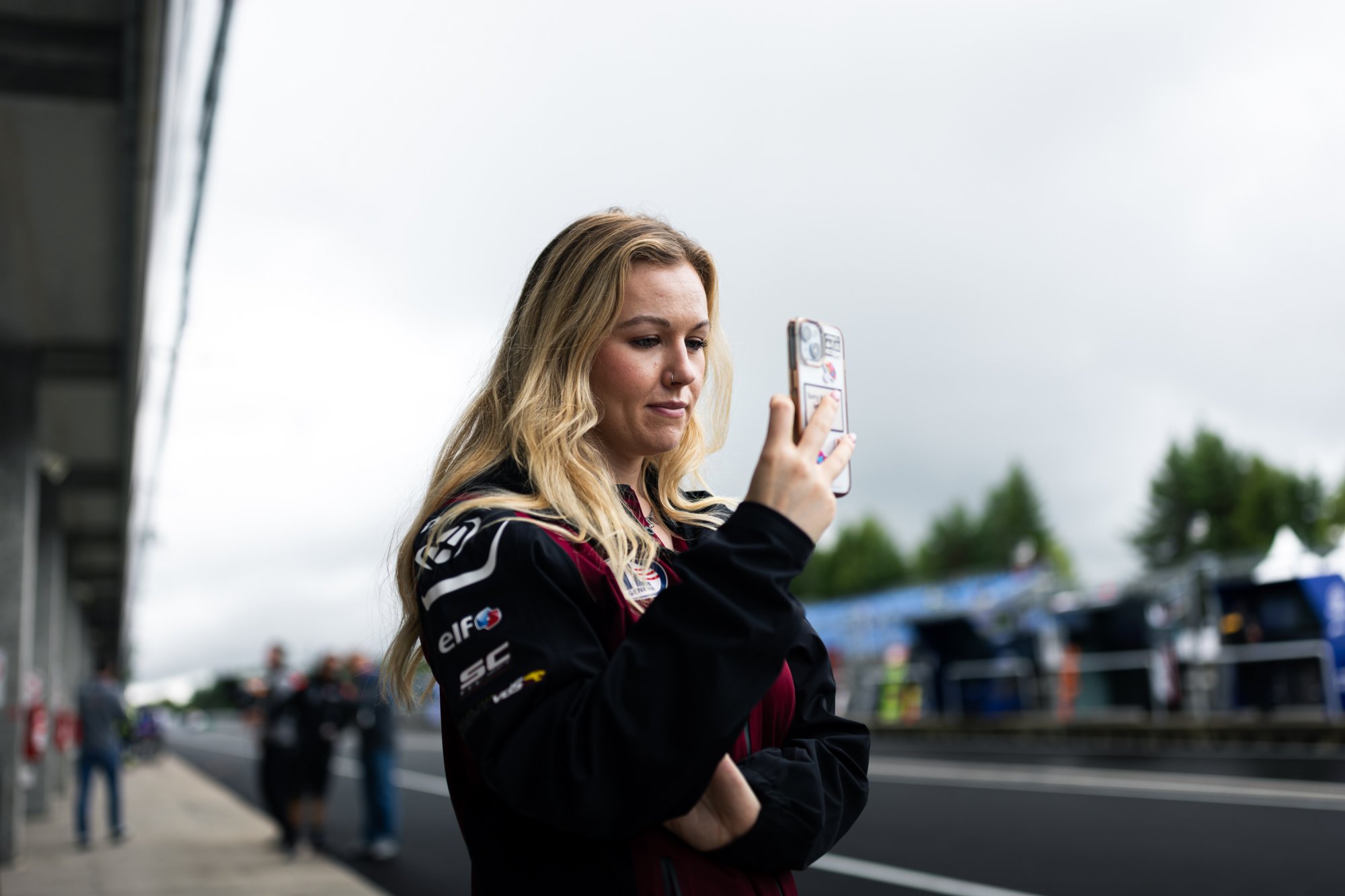
When you look at the social media pages of your favourite racer, team or championship, or you read a press release, you may think it’s just about sharing what’s happening at the racetrack or, in the case of social media, also following the right trends. However, the reality is different, and there’s much more going on behind a note or a post: a strategy to follow, internal coordination within a work team, challenges and even the balance between being human and having emotions, and having to do your job at the same time.
Palmen in Motorradsport talked about all this in a long interview with Josie Smith, a person who spent the last six years working in communication first in Formula 1 and then in MotoGP. And I am hereby publishing the Part 1 of that chat, where we discuss her career so far, how communication is being managed in F1 and MotoGP and the emotional part of her job.
Josie, how did you fall in love with motorsport?
I started watching it with my dad. I watched Formula One when I was very young, just because it was part of our Sunday routine. And I really liked writing, I was very good at English when I was in school, and I really enjoyed writing stories. It was still when women weren't really involved very much in racing. When I said it to teachers that I would like to work in racing, they told me not to pursue it, because for them I wouldn't get anywhere.
So I went into a different profession and became a veterinary nurse. But I also started writing blogs in my free time, about Formula One and then about MotoGP, and I posted them on Twitter and on LinkedIn. One person, who later became my boss, saw my articles and contacted me in 2019 and said: "I really like the way that you write and your passion in it. If we have a job opening coming up, I'll keep you in mind". And that's what happened in 2020, during COVID. And then in 2020, during COVID, I was employed and started working in Formula 1, first part time and then full time.
I was very lucky that I was in a position where F1 was big, but not big enough that the jobs were as in demand as they are now.
How were your first experiences in Formula 1?
I worked for an agency named Pace Six Four, and my main clients were George Russell and Lance Stroll. For Lance, I only did really raise supports for his website and worked a little bit with his management, but we lived a few great moments together, especially when he got pole position at the Turkish Grand Prix in 2020. Just seeing how excited he was and being able to write about that was something really nice.
With George, I have a lot of very fond memories. I was only about three weeks or a month into my career when George had to replace Lewis Hamilton at Mercedes (Russell was still driving for Williams F1, ed). So that was just a completely insane moment for me to be writing saying that he was replacing a multiple world champion at that point. I also ran his GR63 channel. So I was running that and I spent a lot of time coordinating with his management and also his team, and talking to his fans a lot. Through that, I experienced some small milestones, like when he scored his first points in F1, his first podium and when he was announced as a Mercedes driver, becoming Lewis Hamilton's teammate.
And how did your career continue then?
I worked in Pace Six Four as a digital content officer, which meant that essentially I did website and social media for a few clients. I had about five for some time, and then I had my main three, which were Lance, George and a driver called Reema Juffali, who is a talented, lovely Saudi female racer in GT.
In 2023 I left the agency to start working as freelance. And that’s when I ended up in the MotoGP paddock. I started an agency with my then partner and we were working for American Racing in 2023. I was doing communications and social media: press officer, content creator, communications manager...all of that. That was my first experience in MotoGP, then I stayed there and worked with different clients, including also some workshops for the Red Bull Rookies Cup riders, where I taught them how to present themselves and manage their presence on social media.
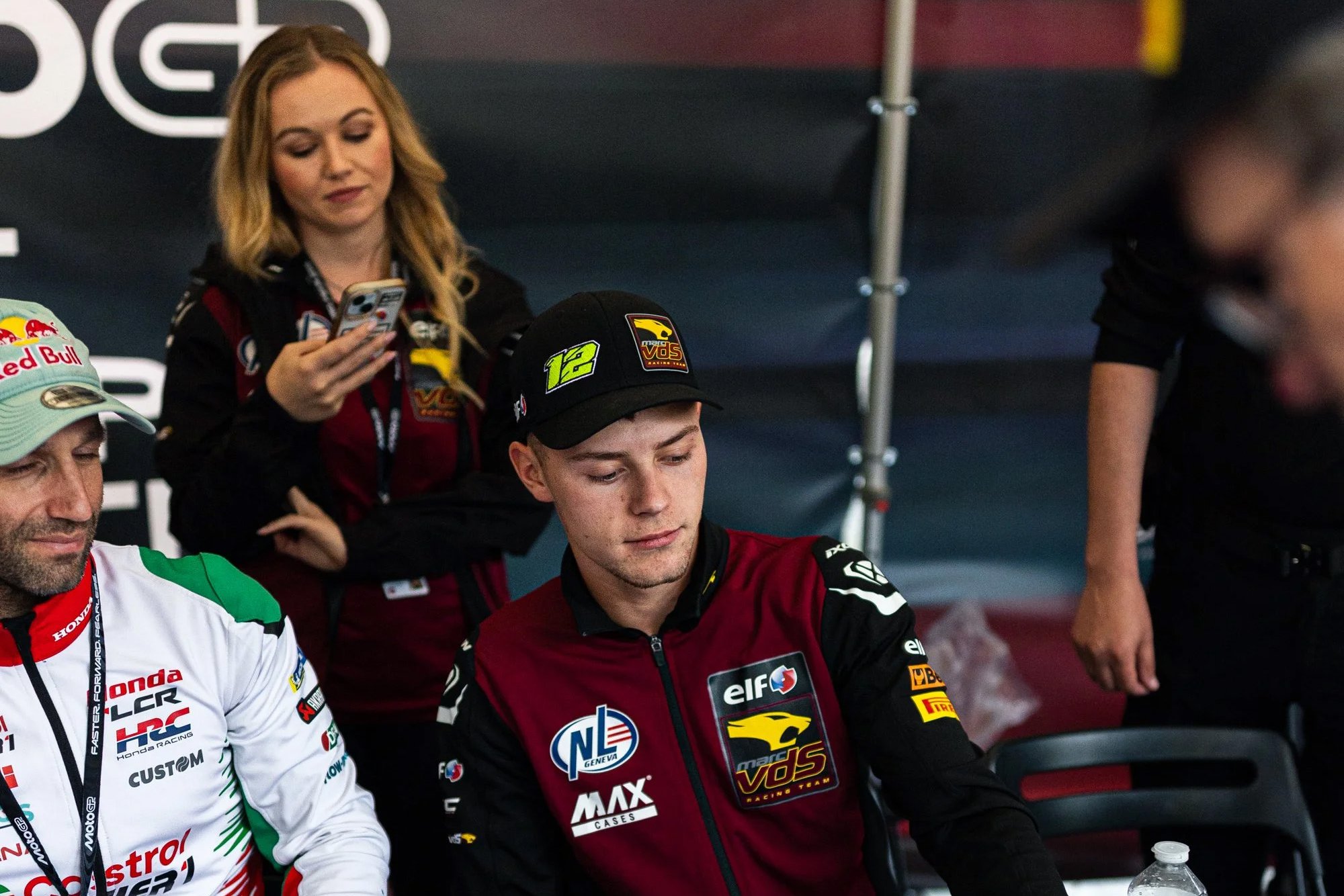
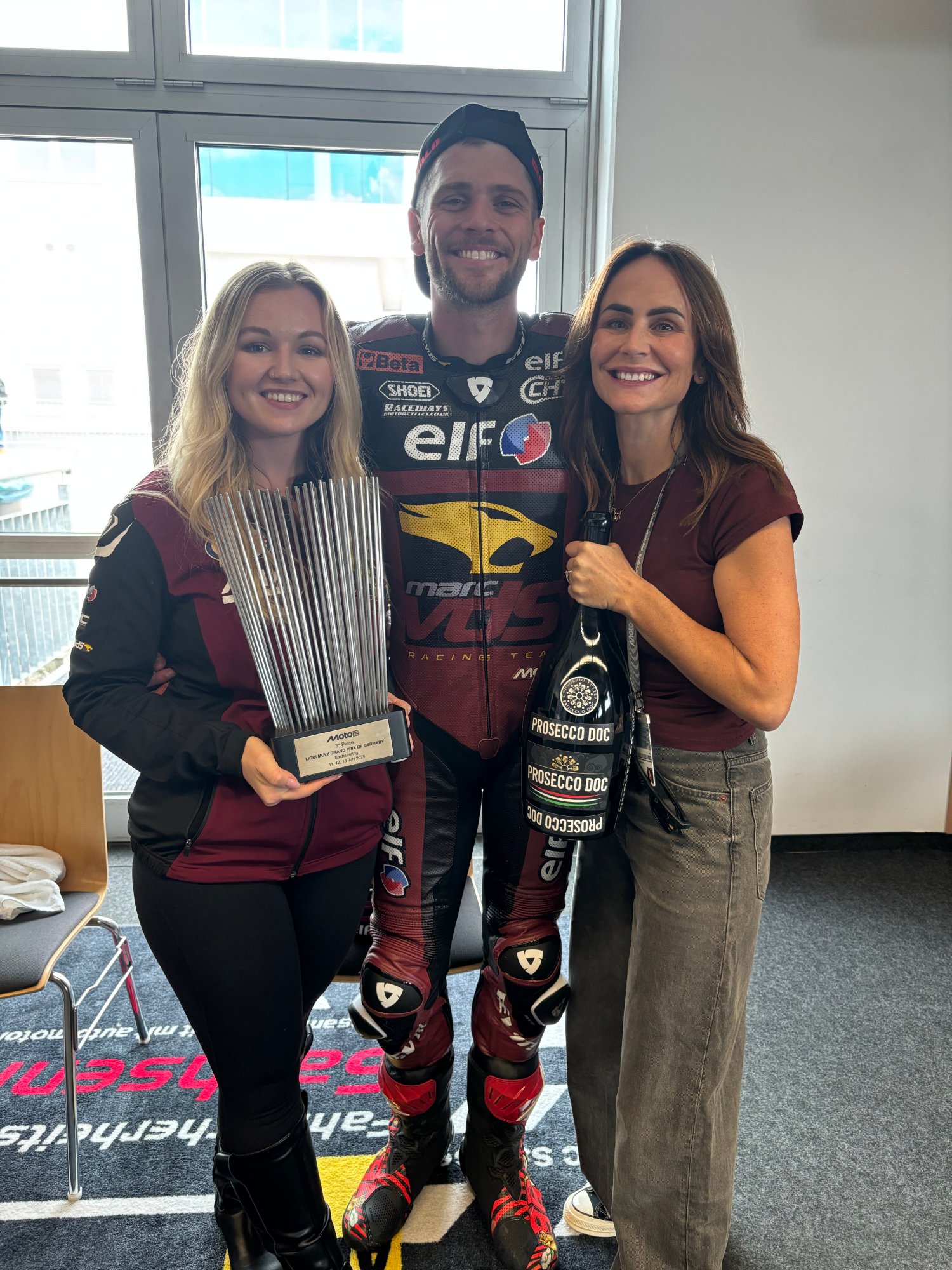
Finally, in 2025 I worked with the Marc VDS Racing Team in Moto2. I was their Communications Manager and also Social Media Manager. Besides following the team, I did a lot of the coordination with sponsors for events that were happening at the circuit. Besides that, I worked also with a few riders, namely Collin Veijer, Jake Dixon, Eddie O'Shea and Jacob Roulstone.
What made you decide to move from F1 to MotoGP?
I still do love Formula 1, but I wanted to do something else. I worked completely remotely, so it was a lot of hours of work without seeing anyone. It was quite isolating.
Didn't you attend any Formula 1 GPs?
If you work for an agency in Formula 1, you're not needed on site because if you're doing the social media, you're doing the social media. That's your only job. There are already other people making videos and creating contents on site, and all you have to do is schedule and post the content.
What differences did you experience, moving from one paddock to the other?
It's completely different working in F1 than it is in MotoGP. In Formula 1 you are working with other people and have many more resources, like in my case, while in MotoGP most teams have only one person running the whole communication, including both social media and press releases. I'm quite surprised that it's still mostly a one-person job in MotoGP. I think F1 has got it a lot better in that they also understand the value of social media and they understand how to present people, present their athletes as what they are: as people, being also able to show their personalities.
Another thing worth a mention is that F1 is a lot stricter with things like sponsor clashes. If you have a rival sponsor in the picture, unless it's sponsoring the event completely and your driver is on the podium, then you can't use that picture.
Do you prefer to be part of a communications team, like in Formula One, or to have full ownership of it, like in MotoGP?
I think there needs to be a balance between the two. I don't like being completely off-site and having to rely on someone doing it all for me, but I also don't want to be sat at 11PM going through everything that I have, either been sent by photographers or taken by myself, and having to edit those things together. Because at that point, it's too much for one person or even a couple of people to be doing.
I like being part of a team, because if there's something that I can't do at that moment, I can ask someone else to help me out. In some MotoGP teams, on the other hand, there's no one else that you can ask. It's your job and therefore you have to do it, which means that actually quite often, you either miss out on important moments, or you miss out on being the place where people find out that information, because it's already been posted from about 50 other MotoGP news channels.
I know things have improved in MotoGP in recent years, but some teams still have their Team Coordinator managing also their social media profiles and press releases, instead of focusing on their pure job. And it shouldn't happen.
What are your best memories from the years spent working in MotoGP?
My main memory is probably in 2023, seeing Rory Skinner get his first points in Phillip Island. It was such a special moment, because it was a big learning curve coming from BSB into Moto2, when he hadn't ridden most of the circuits since he was in Red Bull Rookies Cup long time before.
I would also add Jake Dixon winning in Sepang with a special tribute helmet to his granddad, because I know how much that meant to him. He told us all the stories about how much his granddad loved being in Malaysia, and how much he meant to him. Being able to be there in part for me when he got pole position and then when he got the win was amazing. And after the horrific accident with José Antonio Rueda and Noah Dettwiler in Moto3, it was just a real moment of relief to see that emotion pour out of Jake as well, and see him celebrate with the team and with his wife and daughter.
Other moments that made me very happy where Jacob Roulstone's first ever front row, and in general working with Eddie O'Shea and seeing him grow and settle more and more in the GRYD Racing team and the world championship.
What's been so far the best moment you have experienced in your job in communication in motorsport? And the most challenging one?
I think my best moment overall in my career was announcing George Russell going to Mercedes, because I know that it was his dream. I felt honoured to be a very small part of that dream and being able to tell people that's what he was doing. It was such a lovely moment of watching all the messages pouring from other drivers, from fans, from celebrities. Also to be able to see how far he had come with Mercedes at that point because he'd been in their junior programme since he was 15.
The worst moment, for me, was announcing Marcos Ramirez to American Racing for 2024, because it meant essentially that Rory Skinner's time in the World Championship was coming to an end. I was pleased for Marcos that he had gone back to a team he seemingly worked very well with, but it was hard for me to have to make that announcement to write the press release and say that Rory's time in Moto2 was over. I just wanted to write: "This is the line-up for 2024. Good night."
How hard is it actually to balance the sports and the emotional part of communication?
It's really difficult, especially when you're in a team and you've had a rider that's had a really good race and the other rider has had a really bad race. It's really hard to be in an atmosphere where one side of the garage is so upset and the other one is so happy, because you are torn between two people who you spend more time with than you do your own family at that point. It's really hard to say to one person "I'm so happy for you, you were amazing today" and then have to go to the other rider and console him.
I did spend a lot of time doing that in 2025, because Filip (Salac, ed) struggled more than Jake did with the Boscoscuro bike. There were moments when we were celebrating Jake having a good result, Jake having a podium and then I would have to go and find Philip and get a press release quote from him. The Australian GP in that year was so demanding on this side. He didn't know what to do, and being on the other side of the world, far away from his family, didn’t help.
There are also times when the riders have to work with the fact that we have emotions as well. During the flyaways in 2025, my dad was hospitalized right before the Japanese GP began, and in critical conditions. The riders had to have extra time with how I was doing because I was struggling. And I was on the other side of the world from my family. I was getting a lot of questions from the team, because I had very little sleep and I just couldn't focus. They had to be a lot more patient with me. And that was very good, because they all knew it's really difficult when you're on the other side of the world and you have to ask other people for help to look after someone.
It involves many different emotions, from many different people.
You should have a lot of respect for each other in the team and know that you can't just turn around to someone and shout at them because they've forgotten to do something, because you don’t know how they are really doing in that moment. There are also people who work in MotoGP, miss home, something happens and they don't want to talk about it. And then with riders, they have so much going on because every single race they think of stuff like “I could get hurt”, “One of my friends could get hurt” or “This could be moment of the year when I get this contract or I don't”.
It’s also fundamental to have a good relationship with the riders you work with, and understand who and how they are. For example, from the riders I have worked with so far, Collin Veijer and Jake Dixon are rather blunt, but Filip Salac, Jacob Roulstone and Eddie O’Shea could be a little bit more emotional than the other two.
It's all just such a fine line to walk and balance. And it’s a real challenge.
What do you think about the value MotoGP gives to social media?
They have spent so long seeing social media as something that isn't important, that they haven't actually given value to sponsors or presented themselves as actually quite desirable to put a sticker on the bike, because not so many people actually know what MotoGP is. I will make an example: watching TNT Sports, I had back-to-back adverts from Ferrari sponsors and both of them had at least one Ferrari driver in them. And you don't see that in MotoGP. The only ads that you ever see, and have MotoGP riders in, are on social media and that's it.
What differences do you see in general in how F1 and MotoGP manage communication?
I think with F1, the direction of them trying to appeal to new fans is a lot better than anywhere else at the minute. I like, for example, how they are appealing to people that don't actually know the sport, by doing bits of content that are educational to them. Moreover, they're very good at being reactive to trends and at showing people what's happened penalty-wise and backing, giving a reason for it. They have actually embraced that communications is essential and important for fans, for sponsors, for everyone involved.
On the other hand, MotoGP sees anything to do with communications as an afterthought. I'm aware that your performance on track does take priority, but if you're not getting the budget to improve your bike, your parts and your team, then you're not going to be able to get any faster or sign any better riders, because you're not giving any value to your sponsors, and therefore you can't get more money. I know that Formula 1 has learned that a long time ago, and I still think that MotoGP is about 10 years behind Formula 1 and about 20 years behind football. Or even more.
They still see a sticker on a bike as a valuable sponsor, as a valuable representation of sponsors. And they don't do anything else for them, except for an occasional Instagram post of someone holding or pointing to the sticker on the leathers or the bike. If you're pointing at something, I'm not going to actually take out my time to go and click on their profile to go and see what they actually do. I would prefer a post from the team where they show me what it does, how it benefits them, like when you show that your helmet has a only a few scrapes despite a big crash. That's a valuable bit of information for people.
Moreover, in MotoGP, especially MotoGP teams, they don't like to accept when they are wrong. And they don't understand when something they do in communication may hurt someone.
We have seen that sometimes during the last couple of years.
For example, in 2024 Gresini Racing photoshopped all their crew with Lewis Hamilton's dreads. I asked some of my black friends and other people who worked in Formula One: "Am I being sensitive? Or is this really racist?". And they all agreed that it actually was incredibly racist. That's also why the rumours immediately died about Lewis wanting to buy the team (it was rumoured halfway through 2024, ed). You can't do that, and you can't then decide that because it doesn't offend you, it doesn't offend a different community.
Something similar happened in Japan in that year. When they gave Manuel González a hachimaki and photographed him on the grid, they didn't know it could be offensive against the Chinese people. QJMOTOR, who was their main sponsor back then in Moto2, got immediately angry about. And what did the team do? They just stopped showing the QJMOTOR logo on their bikes.
In Formula 1, just to provide an example, we saw the opposite. Racing Bulls, still AlphaTauri back in the days, put out a poster ahead of their Japanese Grand Prix and they used the Rising Sun symbol in it. When they were told by fans how offensive that was, they took it down and they issued an apology, saying they didn't realise and that they would learn from it. In F1 there's a lot more consideration from teams about what they can use, when it comes to symbolism in their posters and things like this.
At this stage of your career in motorsport and in communication, do you have any particular goal that you want to achieve?
I would like to go back to MotoGP. I'd love to work for a factory team, and I think a lot of teams have riders whose personalities they don't show properly. Many teams focus too much on the results and not enough on who a lot of the riders are as people. I'd love to be able to go work for a team and actually show who the riders are as real people rather than just as riders.
It could be great, for example, to join KTM. They have such a gold mine of riders, because they have so many with Moto2, Moto3 and MotoGP. They have so many different people that have so many different personalities, and I'd love to actually get to properly work with them and help them show a side of them that isn't just a rider.
Part 2 coming soon...Stay tuned!