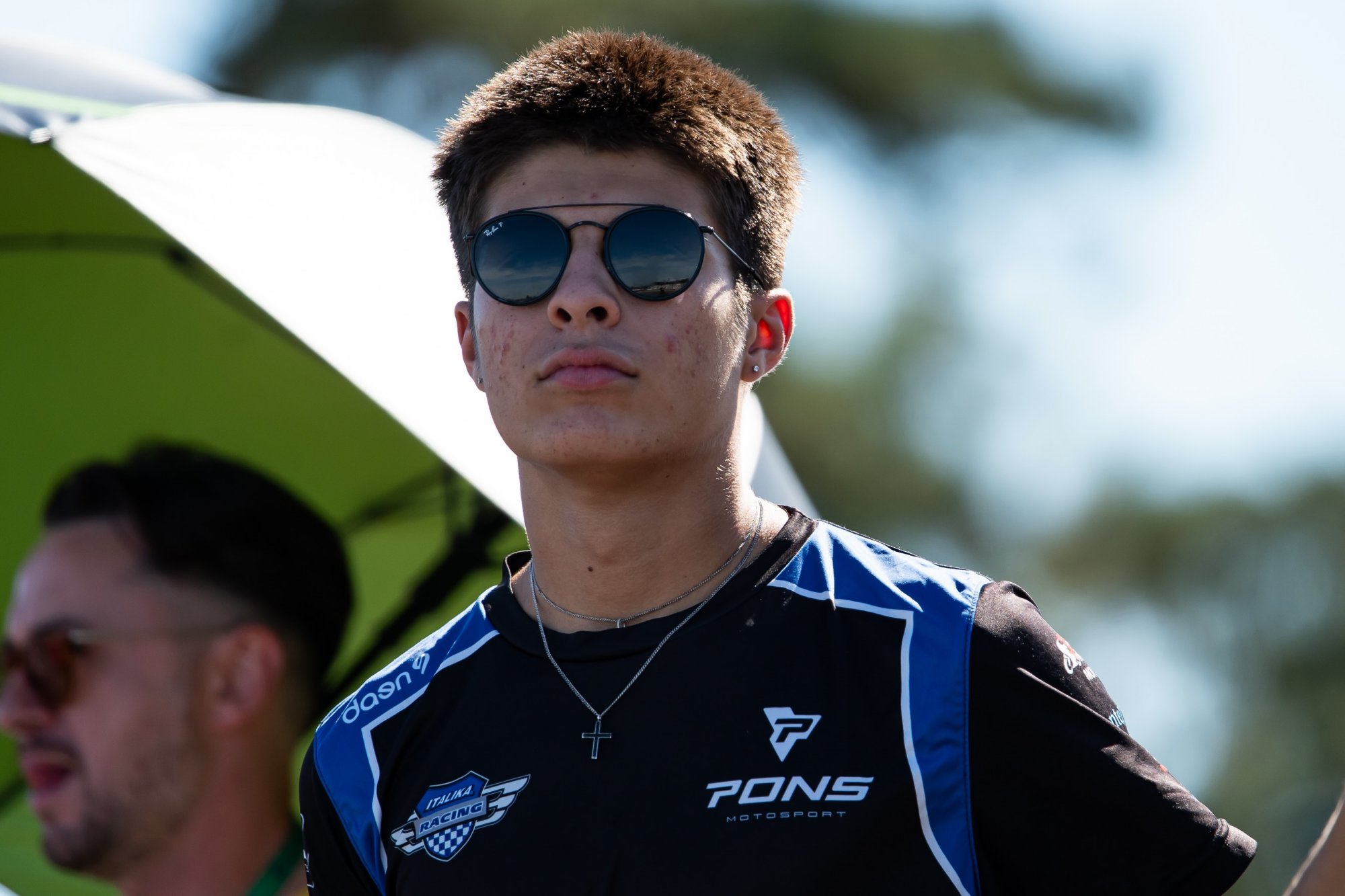
Héctor Garzó: Seeking new certainties, after his Grand Prix time
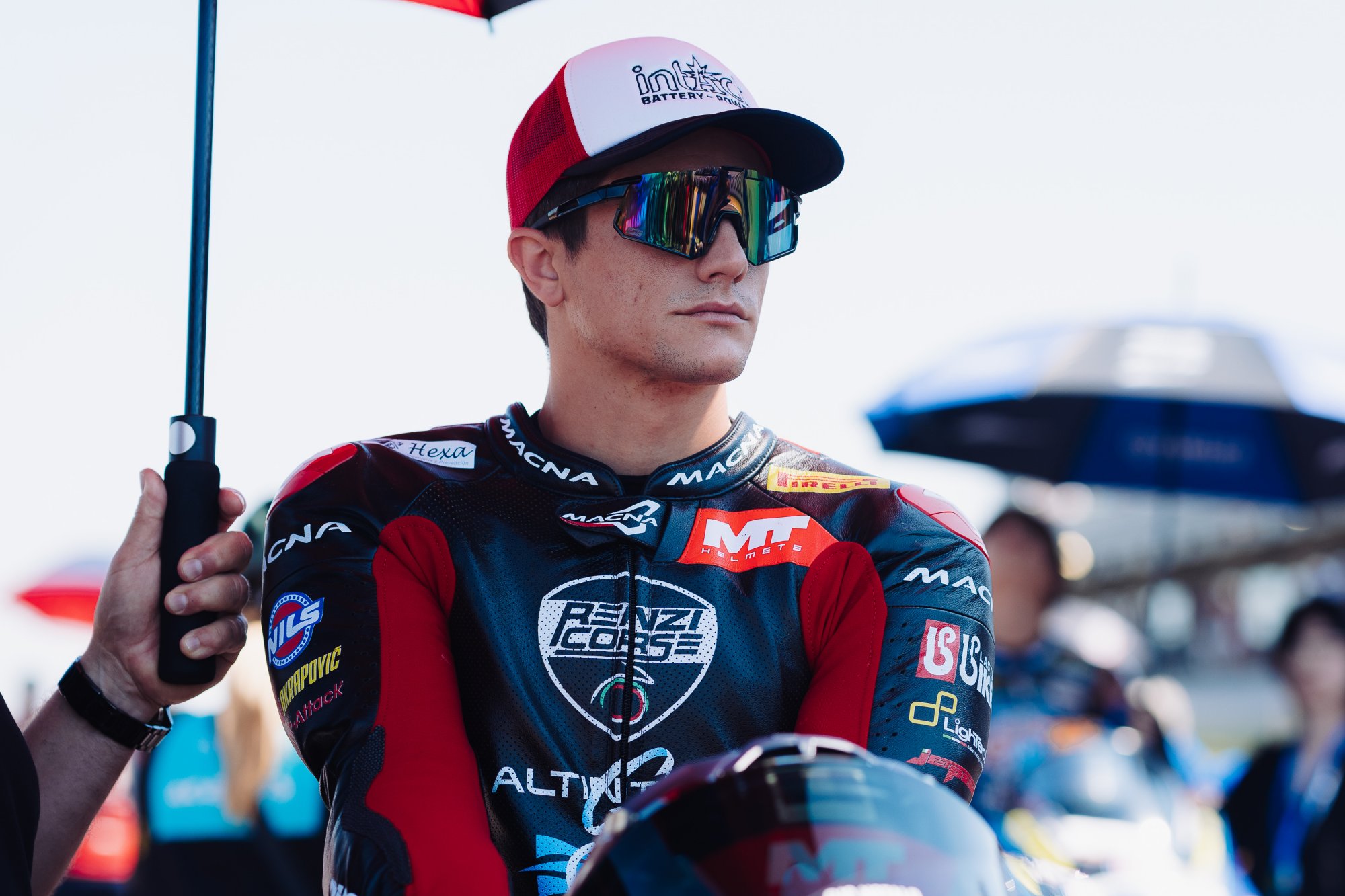
After seven seasons in the MotoGP World Championship, Héctor Garzó began 2026 without a championship to race in
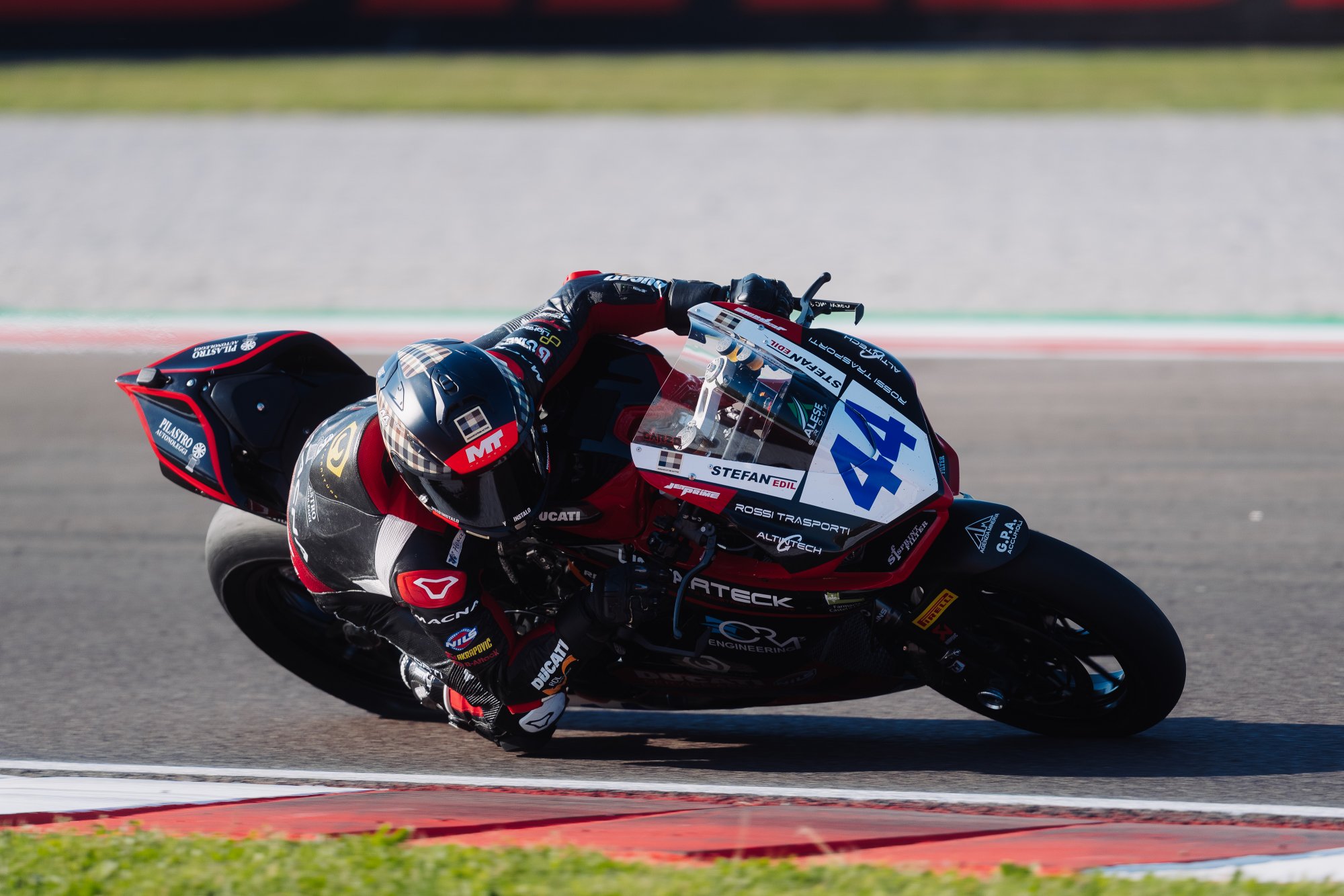
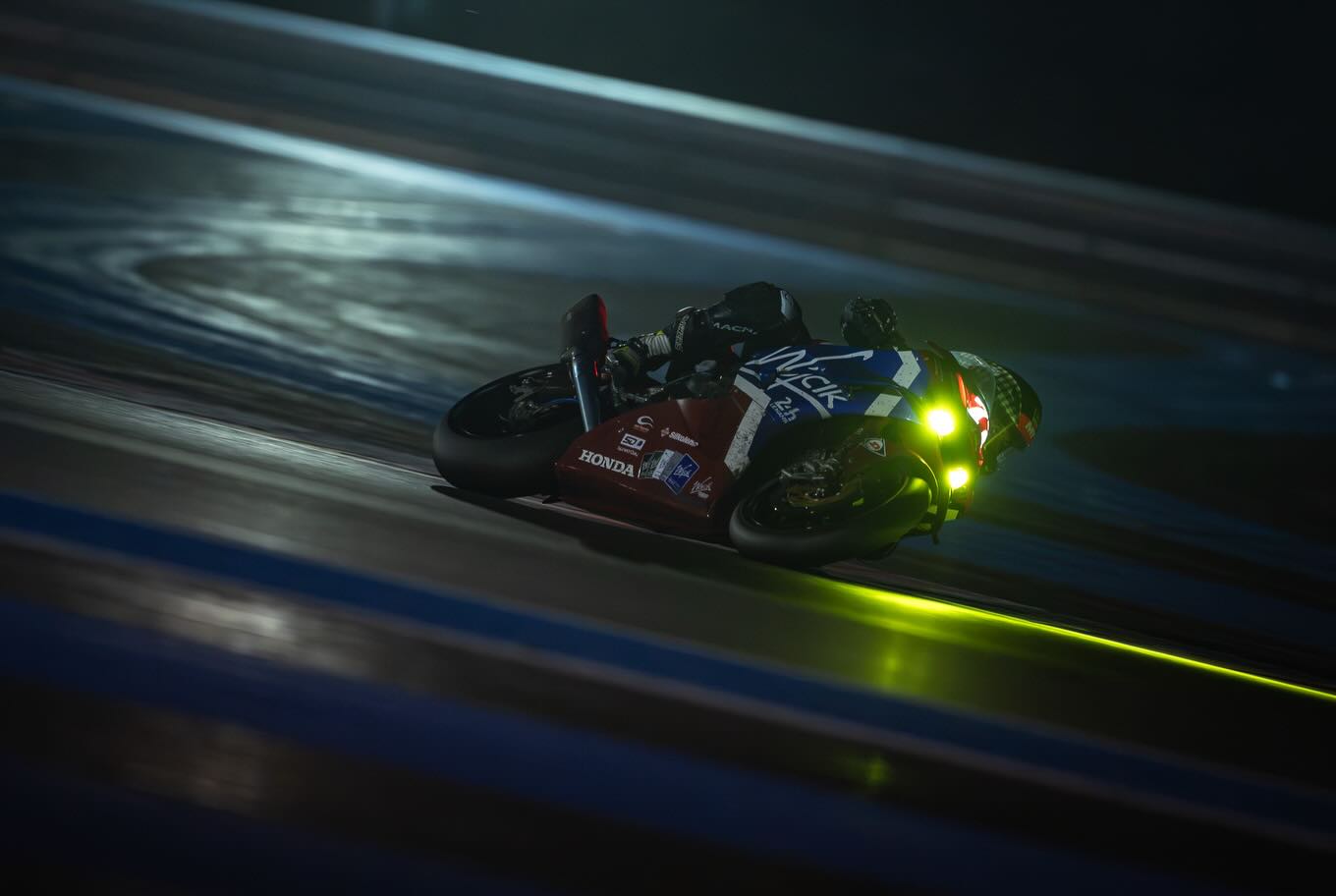
However Garzó, who also secured a Moto2 World Championship podium in 2020 and the 2024 MotoE World Championship title, stepped in halfway through the season in the FIM Supersport World Championship, replacing Riccardo Rossi on the Ducati of the Renzi Corse team. This chapter has been a challenging one, against riders who have been competing in WorldSSP since the start of the year, but it could still prove important for the Spaniard’s future. Meanwhile, Garzó also experienced the FIM Endurance World Championship for the first time, taking part in the Bol d'Or and playing his part in Wójcik Racing Team's triumph in the Stock category.
Palmen in Motorradsport had the opportunity to interview Garzó during the WorldSBK round at Cremona. The result is an enjoyable conversation about past, present and future, as well as the highs and lows in the career of a rider that, as the title suggests, is seeking new certainties.
Héctor, what can you say about your experience so far in the FIM Supersport World Championship?
It's been an unusual year, as I joined the field halfway through the season. I made a brief appearance at Motorland Aragón in 2023 (replacing the injured Apiwath Wongthananon, ed), but these are my first races here with a full-time entry. Since I came late, I need to get to know the team and understand the Ducati Panigale V2 a bit better, while also learning some circuits that were new to me, such as Donington Park, Magny-Cours and Cremona.
We're working very hard and I'm doing the best I can, but we still need more mileage on this bike. The weekend format, with just one proper free practice session, doesn't help much either. It's true that we had a similar format in MotoE, but I still need to gain much more experience to perform at my best. But I believe that, with hard work and consistency, we'll gradually make it to a good level.
Are you already working to stay in WorldSSP in 2027?
Yes. We're trying to have everything in its place out with the sponsors and the team. If it was possible, I would like to continue with them.
You also raced and won the Bol d'Or with the Wójcik Racing Team in the Stock category. How was your first experience in the FIM EWC?
It was my first time at the Bol d'Or, my first time competing in endurance and my first time riding a 1000cc bike. I was listed as a reserve rider, but in reality, I completed more stints than one of the regular riders. It was a great experience, and I spent many hours on the bike. It wasn't my first time racing at night, but everything else was new to me, starting with the championship and its environment. In the EWC, I saw lots of genuine passion for motorcycle racing and huge dedication from everyone involved. On top of that, from such a demanding challenge you can learn a lot and you can face any other championship with even better preparation. It was a wonderful experience, and I recommend it to every rider.
Differently from sprint races, in endurance racing you need to work with your teammates to find the right setup for everyone. Did you struggle with this aspect?
At first, it's a little complicated, because you have to work differently and communicate with other riders that use the same bike as you. In the end, though, I adapted to it quickly. I personally found it harder to understand the rules, how to approach these races and what to do when something goes wrong. You have to spend a long time on track and avoid making mistakes for 24 hours, which is extremely difficult. None of the riders on the team can afford to make a mistake. Everyone has to work together, perfectly and in the same direction.
Do you see the FIM Endurance World Championship as an option for the future?
Absolutely, I really enjoyed racing there. It's a fantastic championship that I would recommend to everyone.
Let's take a step back now. How did your end up in motorcycle racing?
Honestly, I couldn't tell you why, but from the age of six I was asking all the time for a minimoto, until I finally got one. Just a month later, I was already on track for my first race, and over the following two years I immediately started winning minimoto races. From there, I started training with a school that raised many kids: KSB Sport (run by Kike Bañuls. ed). I gradually grew as a rider and I was lucky enough to race for teams that also helped me financially, which was extremely important since my family doesn’t have a lot of money.
You competed in the Moto3 Junior World Championship in the Moto3 Production category (which existed only in 2016, ed). How did you progress from there to the Moto2 European Championship?
It was an unusual season, because there were only a few of us and we were racing against Grand Prix-spec Moto3 machines. Nevertheless, I finished second (behind Aleix Viu, ed). Initially, I wanted to move into the “regular” Moto3 category, but the teams were asking for far too much money given our financial situation. So we decided to move to Moto2 instead, also because the WIMU CNS Team was very interested in me. It turned out to be the right decision, as I immediately secured a podium and finished fourth in the championship in my first year.
In 2017, I also became Spanish Superstock 600 Champion and I made my Moto2 World Championship debut at Sachsenring, with the Tech3 team.
What memories do you have from that weekend?
It was kind of autopilot. I grew up watching races on television, and suddenly I found myself on the grid alongside established riders such as Álex Márquez, Sandro Cortese, Franco Morbidelli, Marcel Schrötter and Thomas Lüthi. And something completely unexpected happened: I qualified fifth!
However, in the race I struggled and I finally fell. The level was extremely high, and I wasn't yet prepared, either mentally or physically, to compete at that level. It was also my first time at Sachsenring, a rather difficult circuit, and I was riding a bike (Mistral, ed) that still needed further development. Nevertheless, we did the best we could, and that experience taught me a lot about what it takes to be in the World Championship.
You then competed in the Moto2 World Championship in 2020 and 2021. Tell us about those two seasons.
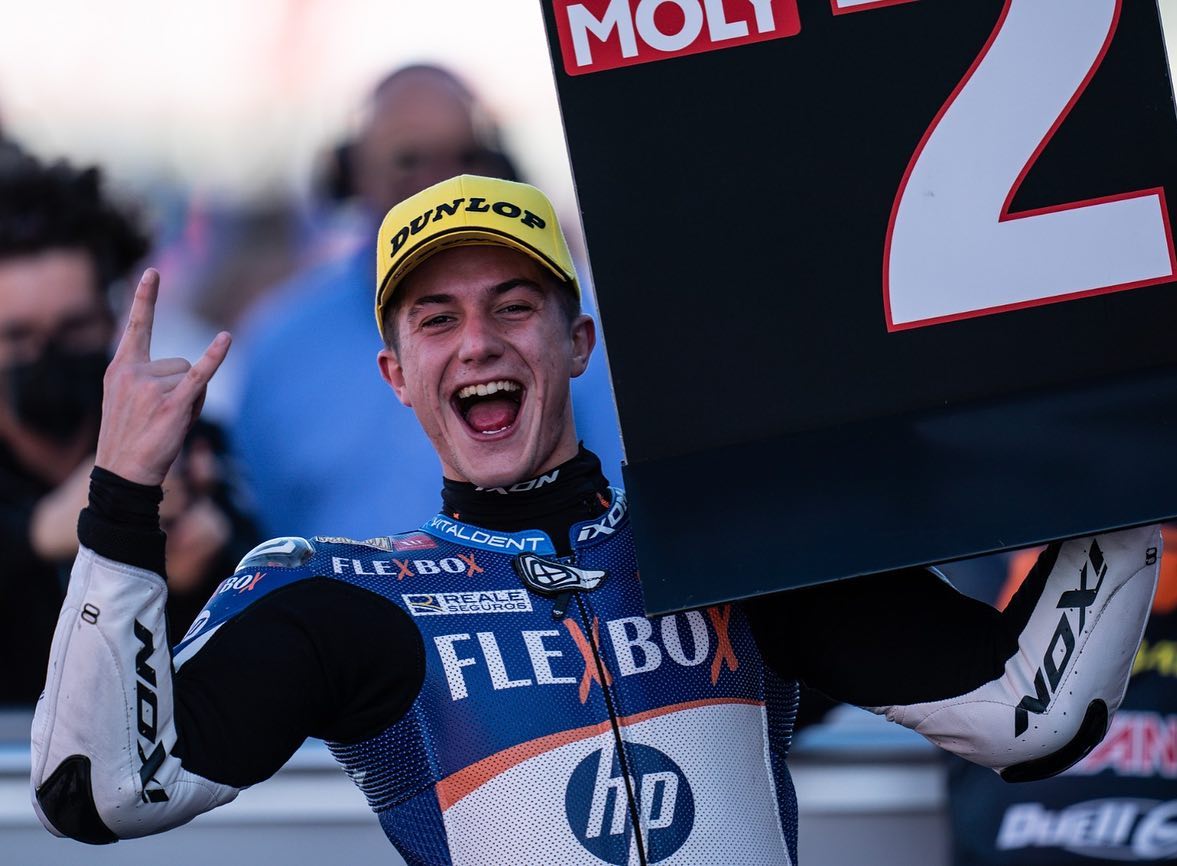
I came from a positive 2019 campaign, where I finished second in the Moto2 European Championship behind Edgar Pons. And, by chance, it was his father, Sito Pons, who brought me into the World Championship. 2020 was a year of great progress. I started achieving top-10 finishes around mid-season and then I continued to improve, until securing my maiden World Championship podium in Valencia, on home soil. That podium was special, because I fought throughout the race with Jorge Martín and Marco Bezzecchi, who are now scoring race wins and podiums in MotoGP.
The progress we made together convinced the Pons Racing Team to re-sign me for 2021. Unfortunately, things went badly that year. I suffered injuries, they changed my crew chief during the season, I parted ways with my manager... It was a disaster. Years later, I found out that other Moto2 teams wanted to sign me back then, but since I had no manager, I couldn't secure a competitive ride.
It's something I still think about today. I would have liked to have more opportunities in Moto2, especially because I competed there during the COVID-19 pandemic, when there were no races in Asia. But anyway, that's how things went...
And then, in 2022, you returned to MotoE, where you had already competed in 2019.
I had received some offers from the Supersport World Championship, but I felt it wasn't the right time to go there yet. Then, I received a good offer to compete in the MotoE World Cup with the Tech3 team, the same team with which I had made my Moto2 WC debut and raced in MotoE back in 2019. I had a decent season, nothing extraordinary. Meanwhile I also competed in the Moto2 European Championship with MV Agusta and the Forward Racing Team, but we had several issues with the bike and we didn't achieve any great results.
In 2023, I joined the Intact GP Team, where I stayed three years and found a family I will always love. It's a team that works extremely well and gave me one of the best moments of my career, as we progressed from our first podiums to winning the MotoE World Championship title in 2024.
How was your way to becoming a MotoE World Champion?
It was a perfect season. I actually made no mistakes, which is even more difficult in a category like MotoE, with heavy bikes and very short races. Apart from Race 2 in France, where I had a issue with the rear tyre and scored no points, I was always at the front and I finished the season with four wins and nine podiums in total. I had some great battles, also against riders I have met again in World Supersport, such as Matteo Ferrari and Mattia Casadei.
I would have liked to repeat that success in 2025, but I got injured at Le Mans straight away and I subsequently underwent three surgeries on my arm. By the time I had fully recovered, it was already too late.
And then, in 2026, you had no seat.
I was left without a team because of two reasons: MotoE was stopped, and then I had problems with the manager I had back then. He prioritised his own interests, and left me high and dry.
What did MotoE mean to you?
Many people thought it wasn’t so competitive, but it actually was a category where you had to be fast, smart and precise. With so little time available for practice, you had to find the right setup and the best feeling with the bike immediately. To fight for the title, it was even more important to avoid mistakes and consistently be in the front. With that format and those bikes, it was difficult to get through a season without making mistakes. That's precisely why I'm particularly proud of the title I won in 2024.
You've spoken several times about having a “complicated” relationship with managers. Do you currently have one, or are you your own manager?
At the moment, I don't have a manager, so I'm managing that side on my own. It's not that difficult, but it's certainly better to have someone who can convince a team to sign you and can help you find sponsors, leathers, helmets and everything else. Still, I kind of like being able to approach a team myself as a rider and say, "Hey, I want to race for you”. I've done that for many years, and on some occasions, it worked out really well. However, it's not easy. It's better to have someone who can “sell” you to a team and say why you're the right person for them.
How do you find the WorldSBK paddock? Do you miss the Grand Prix one?
It's very different from the Grand Prix paddock, more relaxed and with much less pressure on the riders. On the other hand, MotoGP is MotoGP, and I do miss that a little.
When you went through difficult times, such as in 2021 or when you were sidelined by injuries, how did you deal with them?
I believe every athlete has ups and downs in his or her career. If it doesn't, then maybe you're not working as you should. 2021 and 2025 were two negative years in my career, mainly because of the injuries and the subsequent recovery process. In the end, though, these are things we cannot avoid. You always have to work hard to perform well throughout the entire season, not just in a few races. As far as I'm concerned, during those days I always relied on my family and the people who help me with my physical and mental preparation: my mental coach, personal trainer, physiotherapist and more. The people who work with me, basically.
At this stage of your career, what are your goals for the future?
First of all, I want to achieve good results in this season to prove the team, and above all myself, that I can be strong in the Supersport World Championship. Looking further ahead, I could continue on the path to WorldSBK, or I could turn towards the FIM Endurance World Championship, where, as I said earlier, I had a great time.
Do you have a personal motto?
Less Brembo and more Domino! (“Less braking and more throttle”, in other words, ed).
In conclusion, Héctor, here’s the “Thank You Moment”.
Above all, I want to thank my father, because I wouldn't be here without him. I'd also like to thank my entire family and everyone around me, including my girlfriend, my trainer and my physiotherapist. I also thank Hervé Poncharal, Sito Pons and Intact GP team owner Jürgen Lingg. Apart from my family, these are the three people who have helped me the most throughout my racing career. I still have an excellent relationship with all of them.
Palmen in Motorradsport is thankful to Héctor Garzó for his time and to Camilla Canclini (Renzi Corse Team Coordinator) for arranging this interview. Best wishes to both the rider and the team for the upcoming races and seasons.