Paola Ramos wins as a rookie in WorldWCR: What does it mean?
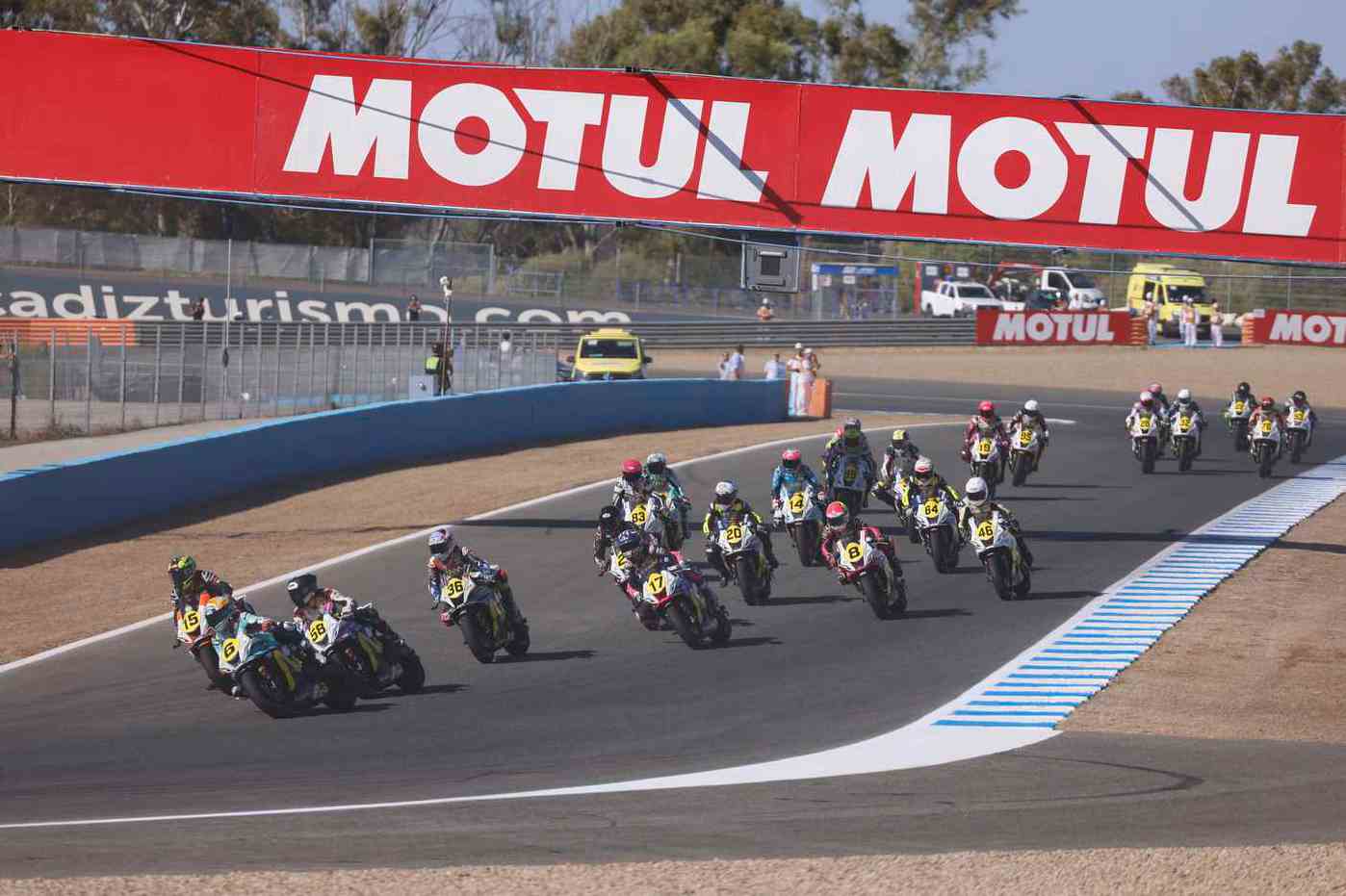
WorldWCR, the all-female motorcycle racing world championship, has come to the end of its second season with María Herrera securing the title at Jerez. However, what impressed the fans and insiders even more was the stunning performance of Paola Ramos.
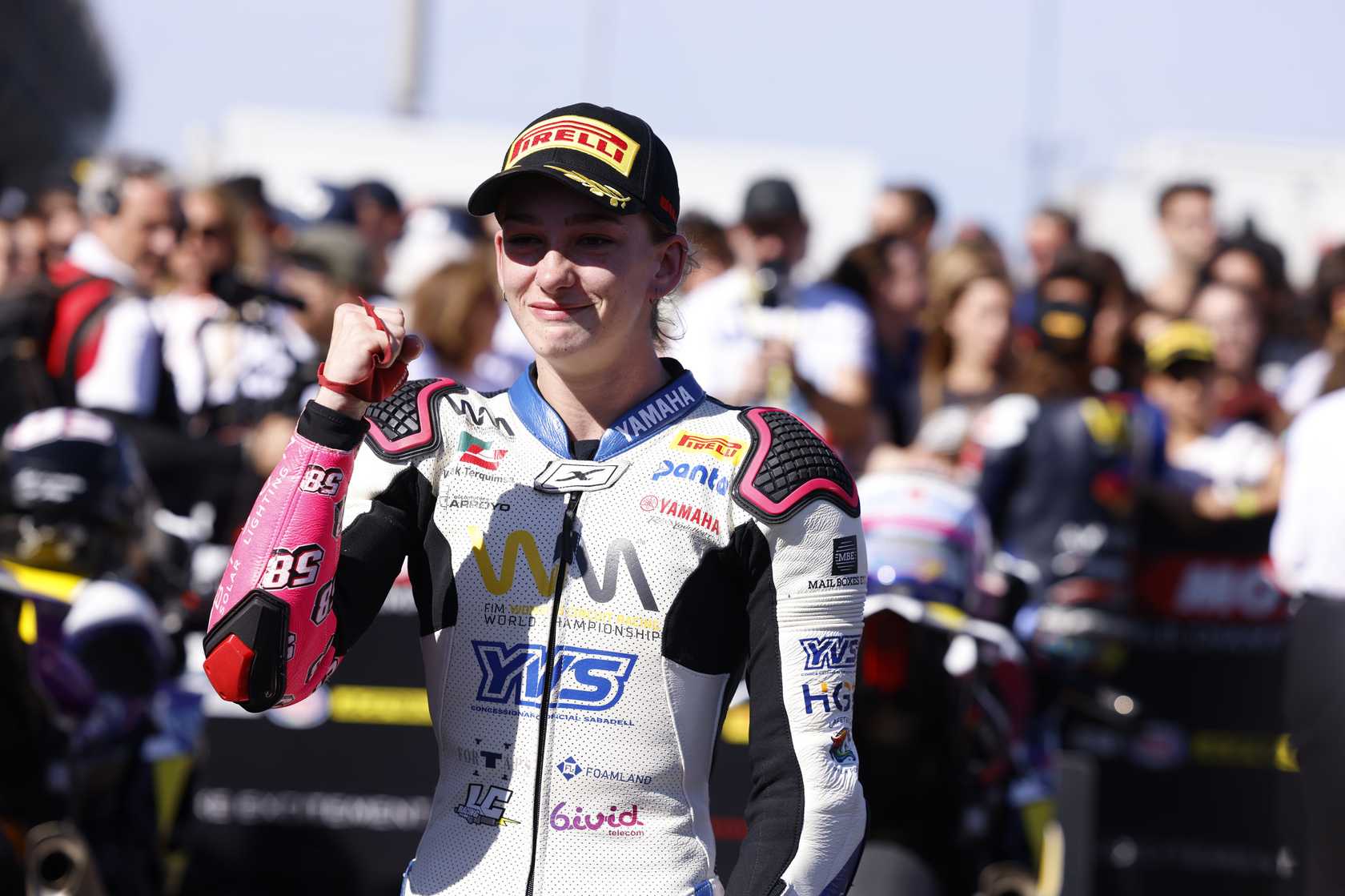
The Spanish rider, born in 2007 in Tarragona, stunned everyone by immediately placing herself among the front runners in practice and Superpole, and most notably by winning both races of the weekend. In Race 1 she was demoted to fourth place due to a penalty after a contact with Beatriz Neila, but regardless of that, two things stood out: the victory of “Superpao #58” in Race 2, achieved in dominant fashion with almost ten seconds of advantage over her rivals, and her spectacular and aggressive riding style, as she was often sliding like in the older version of Moto2 (with Honda engines and minimal electronics) and being much tougher than full-time WorldWCR riders in braking.
With no doubt, this performance confirmed to the whole world the remarkable talent of Paola Ramos. However, behind the race results there may be room for discussion and for some question marks about the WorldWCR. Follow me, or at least try to...
Background of "SuperPao"
For those who only discovered Paola Ramos after the Jerez races, you should know that she had already shown strong potential at a very young age and she returned to competition in 2024 after a long break. She initially raced in the Stock 600 class of ESBK with the Superhugo44 team, founded by the family of Hugo Millán (the young rider who tragically passed away in 2021 during a European Talent Cup race). Even if her results were not outstanding, she performed quite well considering she had not raced for five years.
In 2025 she moved to the Spanish Yamaha R7 Cup with the YVS Sabadell team. And things went much better: five podiums in ten races and a fine third place in the final standings. After that, Ramos also competed in the European Superfinale at Paul Ricard (during the Bol d’Or weekend), and she finished eighth in Race 1. What's the "fil rouge"? Over the last two years, Ramos has competed regularly in mixed championships, battling mostly against men, and she has definitely done a great job, especially in 2025.
Aggressiveness
This also reflected in her debut performance in the WorldWCR. The difference between Ramos’ combative and spectacular riding style and the cleaner, more cautious approach of the girls she was racing against was clear and immediately noticeable. It is true that María Herrera and Beatriz Neila were fighting for the title and therefore had to be careful, but their riding style did not change that much between Jerez and the previous rounds.
What I mean is that there was a visible contrast between someone used to racing against men, where battles are typically fiercer and aggressive moves are more common, and those who have mostly raced only against other women, and are therefore used to a different type of racing. Not a boring type, there is still plenty of excitement, but definitely more calculated and less aggressive.
A similar situation occurred at Jerez in 2024, although without debut victories. Chloe Jones, also making her first appearance as a wildcard, showed a more aggressive riding style and immediately challenged much more experienced riders like María Herrera, Ana Carrasco, Sara Sánchez, Beatriz Neila and Roberta Ponziani. Not a small detail: Jones was coming off a full season racing against men as well, specifically in the Kawasaki British Superteen Championship. In the single-make series for young riders, fielding Kawasaki Ninja ZX-4RR machines, she claimed several podiums and finished fifth overall. The difference showed there, as well.
Conclusion
No one has the universal truth and this is just my opinion, well open to debate and correction, but it seems like for female riders aiming to reach the top levels of motorcycle racing and compete against men, racing exclusively in all-female series may not be the most formative path and could even represent a step backward rather than a move forward. An international women’s championship is absolutely necessary and provides a prestigious platform for them, but the races we have seen in the first two seasons have often shown less aggressive and more cautious competition, compared to what we see in mixed championships (with a few exceptions).
When that is the case, returning to mixed championship can result in a bigger shock. Beatriz Neila’s experience is a good example: she was extremely fast in the 2018 ESBK Supersport 300 Championship, she scored points and one top 1o finish in the WorldSSP300 in 2019, but she appeared “scared” when returning to WorldSSP300 as a wildcard in 2021, after a year spent dominating the Women’s European Cup. It was no regression, Neila did not suddenly become slower...Simply said, she had gotten used to a different kind of racing. That's all.
If a girl's main goal is to become a women’s world champion, focusing on the WorldWCR is the ideal path to grow and achieve prestigious results. But if her objective is to reach for instance WorldSBK or MotoGP, perhaps other choices would be wiser. The possible "perfect recipe"? Compete and shine in the WorldWCR, which undoubtedly offers an important and prestigious platform, while also racing in a mixed championship to train at fighting against men. After all, the women’s world championship has only six rounds, which easily allows for a double commitment (budget permitting) and better preparation for future challenges.
Paola Ramos has proven this, and the same applies to Anina Urlass in the Northern Talent Cup, Smilla Göttlich in the ADAC Junior Cup, Luana Giuliani in the Italian CIV PreMoto3, María Herrera herself in the MotoE World Championship (and previously in Supersport and Moto3), Ana Carrasco when she raced in WorldSSP300 and more. In motorcycle racing, women can fight alongside men. It is not easy, but it is certainly not impossible...
Photos: William Joly