Moto2 Rider and Spanish Champion - Let's Meet Eric "La Bala" Fernández
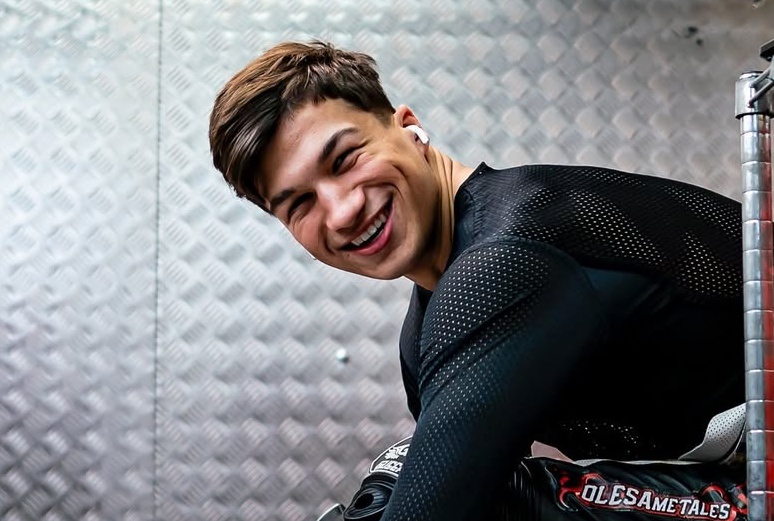
For ages, Spain has been the homeland of many talented motorcycle racers, as we know, and among those who have emerged in recent years, is definitely Eric Fernández.

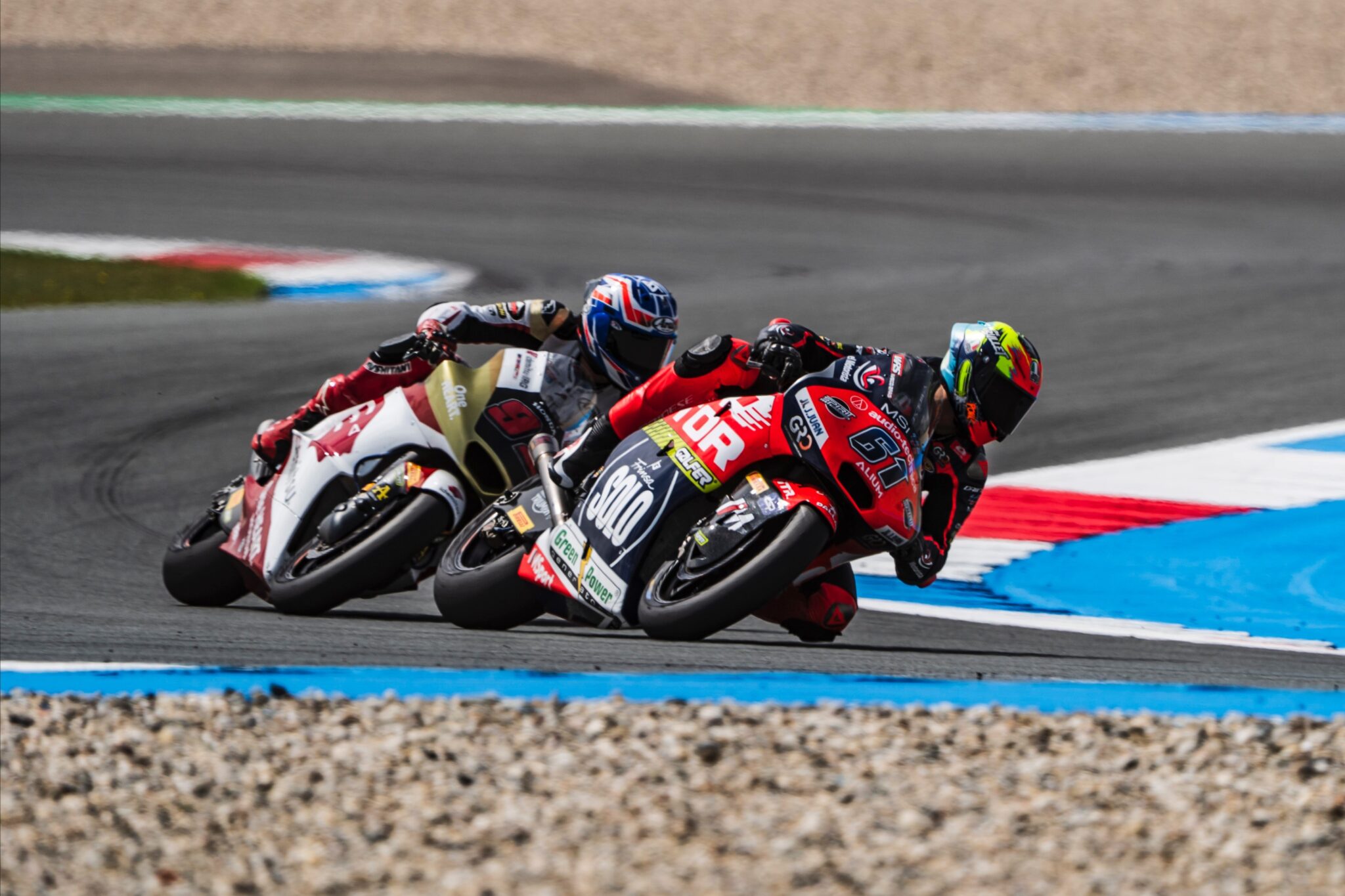
Born in 2007, in recent seasons Fernández became Spanish Champion in the Supersport 300, Superstock 600 and Supersport NG classes and he has also emerged in the JuniorGP paddock, by fighting for the Stock title and scoring some podium finishes in the Moto2 European Championship. In 2025, he was even given the opportunity to race in the Moto2 World Championship with the QJMotor-Frinsa-MSi Racing Team, which called him up to replace Sergio García. However, this stint ended earlier than expected after four GPs (Mugello, Assen, Sachsenring, and Brno) which were full of challenges. Still, there are many reasons why this rider's nickname is “La Bala” which in Spanish means “The Bullet”.
Palmen in Motorradsport decided to interview Eric Fernández to get to know him better and share his story of successes and struggles, also under the guidance of a manager and coach who knows this sport very well: Héctor Faubel.
Eric, how were these first races in the Moto2 World Championship? How was the adaptation?
It was complicated, because in the end you arrive at circuits you don’t know, you race in front of a big crowd, and you’re surrounded by people you don’t know or who don’t know you. Everything is much more difficult: the pressure, the nerves, the desire to do well so you can stand out. It’s been tough, really, but I won’t stop trying, and I know that sooner or later I’ll manage to make a name for myself in the world championship as well.
Did you expect such a big difference between the European Championship and the World Championship?
No. The biggest difference is that everyone is extremely close, but the level itself isn’t anything outrageous. It’s just that from day one they’re already riding at pole position pace. You arrive at circuits you’ve never seen before, and already in the first sessions they’re putting in incredibly fast lap times. In short, here no one waits for you. And that’s really the hardest part about the world championship.
Now, let’s take a step back to better understand your journey. First of all, how did your career in motorcycle racing begin?
I’ve always been a “restless” kid, ever since I was little, and my father has always liked motorcycles. So, he would put me on a bike, I’d open the throttle, and in the end he decided to buy me a pocket bike. That’s how I started training, and from there, everything took off.
And what can you tell us about your first seasons?
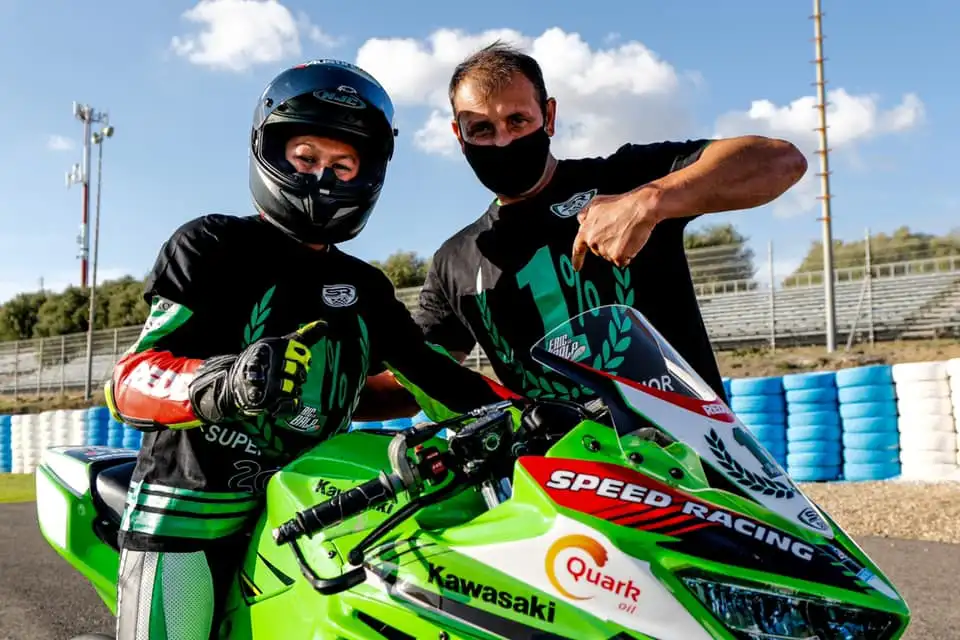
I started with pocket bikes and won the Catalan Championship, the Mediterranean Championship, and other titles as well. I raced in the 70cc class, where I finished second, and then I moved up to Moto4 in 2017. The first year in Moto4 was a bit difficult, although we still managed to get on the podium, while in 2018 (with the Speed Racing team, ed.) we started winning races, and I finished third in the championship in a season with a very high level of competition. That year, I raced against riders like Ángel Piqueras, Diogo Moreira, Adrián Cruces, David Muñoz… many of whom are now in the world championship themselves. It went really well, honestly.
Then you had a tough season in the European Talent Cup, right?
I joined ETC very early, because I was 12 years old and one of the youngest on the grid. That season, we managed to qualify for every race and scored some points, but it was still a really tough year—mainly because of my age, lack of experience, and the big jump from Moto4 to the European Talent Cup.
After that, you took a turn in your career and moved to ESBK Supersport 300 (also returning to the Speed Racing Team, ed.). For you, was that change more of a new opportunity or more of a “fallback” after not being able to stay in the ETC?
I’m not the kind of person who thinks too much about things, about actions or about what might happen. Whatever happens, happens. Every opportunity that comes up, I take it. I had the chance to move to the 300cc, and we made the most of it. In the very first year, we won the title with a fantastic season, and I was only 13 years old. From there, the main goal was to move up to the WorldSSP300, but in the end, it was not possible because I was still too young, so I raced another season in the ESBK (finishing third, ed.).
And in 2022 you moved up to the 600cc class.
Yes, that was an important turning point that eventually brought me back to prototypes. Those were seasons in which I learned a lot. In 2022 I had a Kawasaki that worked fine, but it wasn’t as competitive as a Yamaha machine, and on top of that, I was racing in the Stock category against riders of the Supersport Next Generation class, meaning I was up against riders with much more high-performing bikes. I always had to push to the maximum. But that’s how I grew a lot, and above all, I learned never to give up. That’s where I really forged myself as a rider.
And in the end, you also won the ESBK Superstock 600 title.
I arrived at the last round with a broken hand and even had to get injections to be able to race. In qualifying, I didn’t do well, but in Race 1 I was making my way up the field despite the injury, before I was then taken out by another rider. For safety reasons, we didn’t do Race 2, but we still managed to win the championship, and from there I made the jump to Supersport Next Generation with a Ducati (still with Speed Racing, ed.).
How were those two years in the Spanish Supersport?
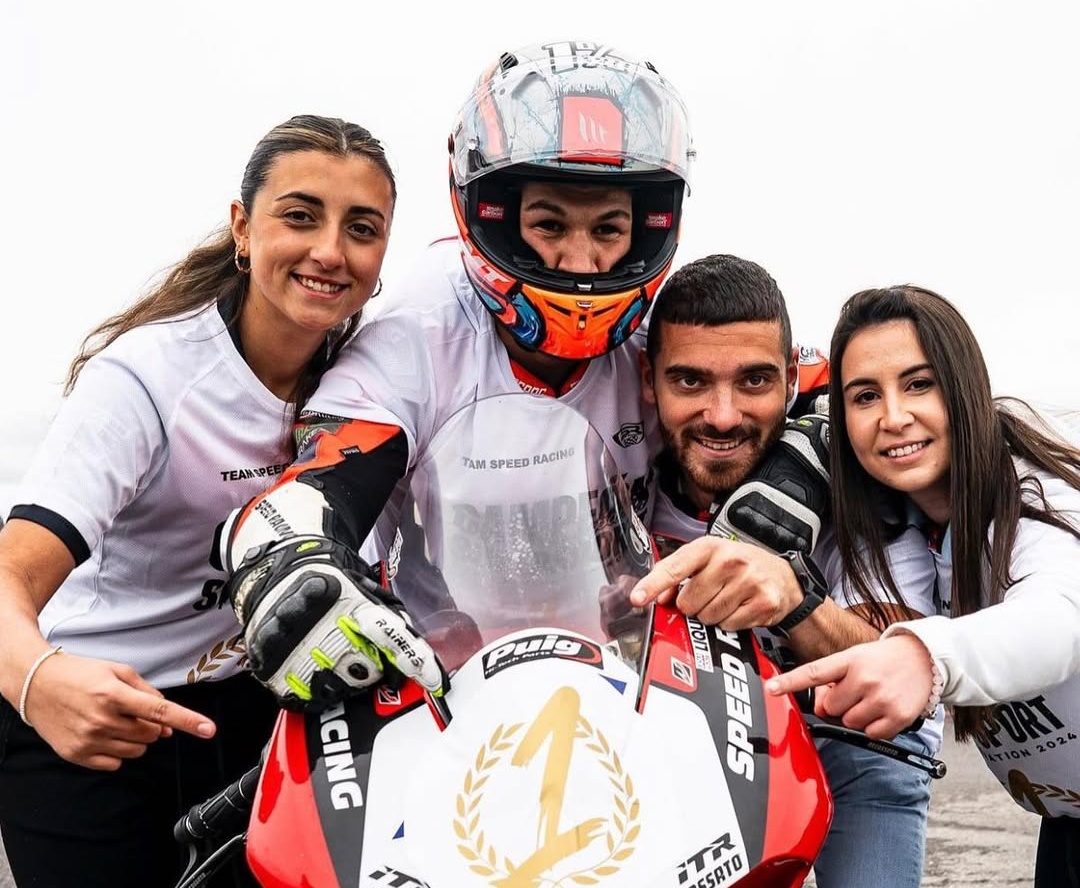
In the first year, I finished second (behind Andy Verdoïa, ed.). I feel that championship was mine: we won the first four races, we were in a great position, but then we had some technical issues, we missed a few races, at Jerez there were two red flags… In the end, between one thing and another, they took the championship away from us. But those who know, they know we were the strongest, and we confirmed it once and for all in 2024, the year in which we won the title by taking 12 wins out of 14 races.
And in 2023 you also raced in the JuniorGP Stock class with the Fau55 Tey Racing Team, fighting for the title before earning your move to Moto2.
That’s exactly what we were aiming for: to do the European 600 class in order to move up to European Moto2. And it went well. That year I had different bikes and tires (compared to ESBK, ed.), so it was a bit more difficult, but we were competitive in every race, and I even managed to win twice and finish second in the championship.
How was the move to Moto2 (with the same team, ed.)?
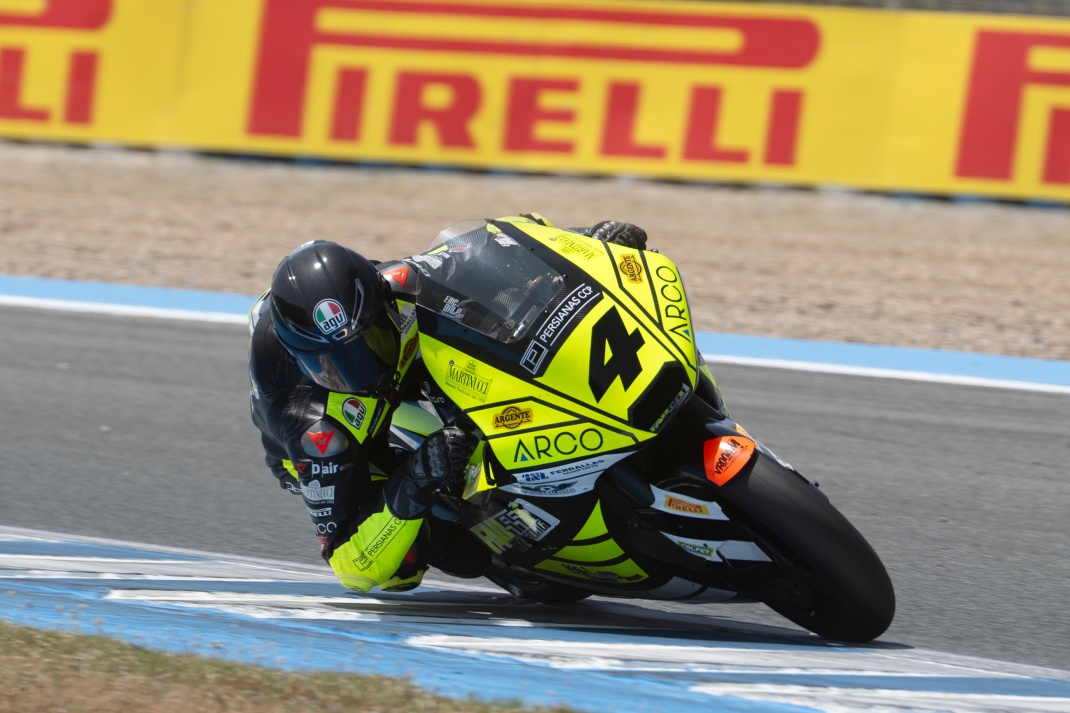
In 2024, it was complicated because Moto2 is a really tough category, but we managed to get some podiums and adapt fairly quickly. In 2025, we switched to the Boscoscuro chassis, which I really like. In the first two races, we were in podium or victory contention, but I made a mistake at Estoril that ruined the first two races. At Jerez, we got on the podium, and then came the news about moving to the world championship with the MSi team.
And how was it to receive that news?
I couldn’t believe it. There are riders who know from a young age that they’ll make it there, but I had to earn it. I don't come from a rich family, so for me, just getting there was already a victory. Neither I nor my family imagined we’d get this far. We knew I had courage and was fast, but because of the costs and of various difficulties, it’s always been very complicated. When they gave us the news, we couldn’t believe it... It was incredible for me, my family, and my friends! But we want even more: we know we can do better than in these first races in the world championship.
Speaking of you as a rider, what are your main strength and your main weakness?
My weakness is that I need to take better care of myself physically. Moreover, in the world championship, my main issue was concentration, because I had so many things on my mind, but we worked on it and I’m still working on it. As for my strength, I’d say I’m a very aggressive rider, as anyone who knows me is aware of that, and I never give up. That’s also what has brought me this far.
Never give up. So you’ve never thought about quitting, not even in the tough moments?
Never. I don’t think about the future; I live in the present. My father and mother taught me to always fight and that’s how I was raised. In fact, I can tell you I don’t really have idols, and if I take inspiration from someone, it’s my mother. We’ve been through hard times, and thanks to her, I’ve never given up. This also goes for my father, of course, but especially for her.
What passions do you have outside of motorcycles?
I like spending time with my family and friends. I’m very close to "my people" and I hold on to those who have always been there. I also enjoy doing other sports outside of motorcycling: sometimes I play football, and above all, I love boxing. Boxing is definitely my favorite hobby.
And who are your favorite athletes?
I especially liked a Mexican boxer known as “Pitbull” (the ring name of Isaac Cruz, ed.). I also really like Fermín (Aldeguer, ed.) because he’s earned everything on his own. In my own way, I try to follow in his footsteps. I also take inspiration from Héctor Faubel, who is both my manager and Fermín’s.
You just mentioned Héctor Faubel, your manager and coach as well as a highly experienced former rider. What has he mainly taught you?
He has taught me that anything is possible. The idea of never giving up was something I had already learned from my family, but he has always believed in me. I want to thank him and José Regaña, because they are among the few people who have believed in me in this world. And here, it’s rare to find someone who stands by your side when things go wrong.
In conclusion, is there anyone else you’d like to thank for everything you’ve experienced?
I also want to thank my mother and my whole family, including my grandparents and my uncle. I also want to thank Alejandro Monzón, who has been helping me not only financially but, more importantly, by believing in me, and Daniel Mogeda (currently racing in the Supersport 300 World Championship, ed.). For me, Daniel is like a brother: we spend every day together, he gives me strength, and he’s always there for me. Having people like that in the motorcycle world is extremely rare. Lastly, I want to mention my uncles who are no longer with us. I always carry them with me and keep moving forward for them too, after they also taught me never to give up.
Palmen in Motorradsport thanks Eric Fernández for his time, and Miriam Triguero (QJMotor-Frinsa-MSi Racing Team) and Héctor Faubel for making this interview possible. To “La Bala,” the very best wishes for his career.