Torn By Pressure: The Lost Story of Christian Gemmel
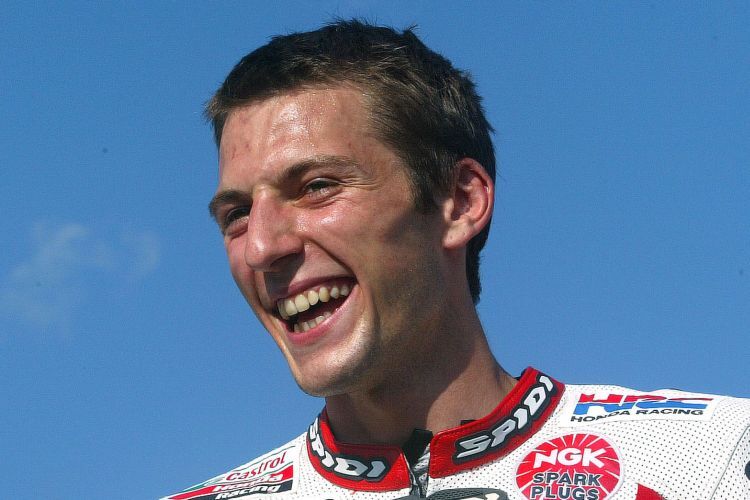
When a child or a young teenager starts riding motorcycles, they usually take it as a game, without expecting anything special out of it. But as the years go by, things start to get more serious, and the higher you get, the more pressure there is to get results in order to keep moving forward.
And the level where this pressure reaches the peak is, unsurprisingly, the World Championship — in this case, specifically, MotoGP. With hundreds of millions of viewers tuning in from around the world, major interests on the table and the maximum level of competitiveness and selfishness (let's be honest), riders and teams are under extraordinary pressure, constantly needing to deliver results — which don’t always come. And when results don't come, it gets really tough mentally, especially if you're one of the few riders representing a country like Germany, which has a strong tradition and deep interest in this sport.
History has no shortage of riders who, despite achieving excellent results in the feeder series, reached MotoGP and burned out. And the story I’m telling you today is a case as emblematic as forgotten: Christian Gemmel.
A promising start
Christian Gemmel was born in 1980 in Hettenrodt, a small German town not far from the border with Luxembourg. Christian began racing in German championships with good results and eventually made his way to the 125cc class. In 1998, he stood out in the IDM — Germany’s main motorcycle racing championship — while also competing and scoring a few points in the European Championship, where he finished 13th in Austria at the Salzburgring and 14th in France at the Circuit Carole.
In 1999, Christian Gemmel moved up to the 250cc class and was signed by Kiefer GmbH Racing, a newly formed team founded by brothers Stefan (a former rider) and Jochen Kiefer. Gemmel and the Kiefer team competed in both the IDM and the European Championship, growing steadily year by year. They consistently performed well in Germany and began to shine on the continental stage as well. In 2000, Gemmel achieved his first European Championship podium with a second place in Braga. Meanwhile, he also participated as a wildcard in the German Grand Prix of the 250cc World Championship — finishing 23rd in 1999 and crashing out on the second lap in 2000.
In 2001, Gemmel continued to perform well in the German series, though the much-desired national title still eluded him, as more experienced Matthias Neukirchen took the crown. Nonetheless, Gemmel was shining again in the European Championship as well, where he finished sixth overall and earned two fifth-place finishes in Most and Braga. He also raced again as a wildcard at the Sachsenring in the World Championship: in a chaotic race with many crashes and only 20 out of 34 riders finishing, Gemmel kept it together and crossed the line in 17th place.
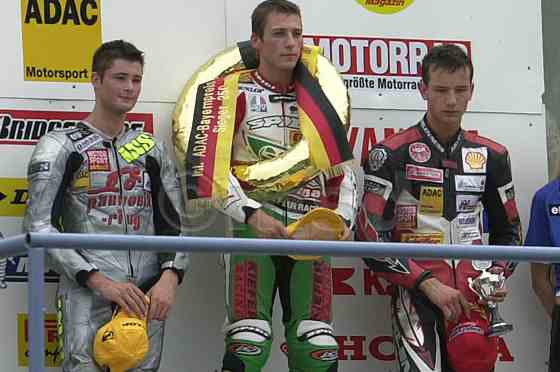
After years of steady growth, 2002 was going to be a decisive year for both Gemmel and the Kiefer Racing team — possibly their moment of truth. And how did it go? Well, Gemmel was finally crowned 250cc German Champion after beating even Max Neukirchner, a name that would soon become well-known in international racing. But that wasn’t all: Gemmel also played a leading role in the European Championship. He won two races (Most and Cartagena), secured three more podium finishes, and battled for the title right to the end against Álvaro Molina. In the end, Gemmel finished second overall. That same year, he returned once more as a wildcard at the Sachsenring — but again retired on the second lap.
The German title and the strong season in the European Championship gave a huge boost to Christian Gemmel and the Kiefer Racing team, and Stefan and Jochen Kiefer’s squad decided it was time to raise the bar even further. And how did they do it? By making their debut in the World Championship.
A good rookie season
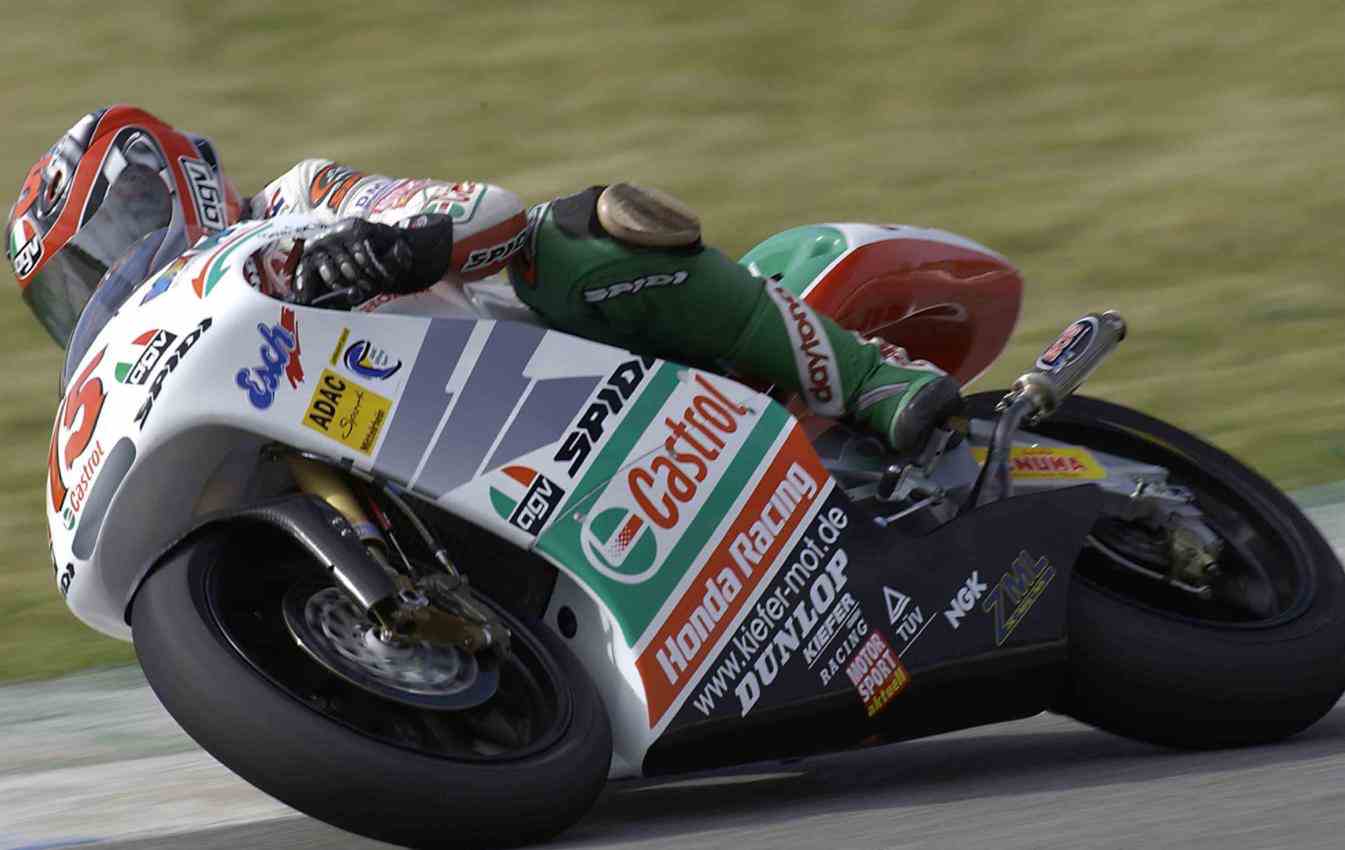
In 2003, the Kiefer Racing Team (renamed Kiefer Castrol Honda Racing) decided to make a full-time move into the 250cc World Championship, and they brought along their rising star Christian Gemmel. And to be fair, the season was overall not bad. The start was a bit shaky between Suzuka and Welkom, but little by little, the combination formed by a debuting privateer team, a rookie rider, and a Honda far from the best bikes on the grid began to make progress. By the third round of the season, in Jerez, Gemmel scored his first World Championship points with a 14th-place finish. Interestingly, the German rider finished just behind Éric Bataille.
And the following Grand Prix at Le Mans went even better: Christian Gemmel qualified 22nd, but in the race, he pulled off a solid comeback and finished all the way up in 9th place — his first-ever top 10 in the World Championship.
It was a good moment for Gemmel and Stefan and Jochen Kiefer’s team. After a 16th-place finish at Mugello, they scored more points in Barcelona with a 15th-place result and, especially, they put in another strong performance at Assen. On the Dutch circuit, Gemmel only qualified 20th, but then the rain started to pour hard for the race. What happened? Gemmel stormed through the field to finish in 8th place, which would ultimately stand as his best-ever result in the World Championship.
The second half of the season was a bit up and down, but Gemmel still managed to score more points with 15th-place finishes at Brno and Estoril, and a 12th place at Motegi. There were challenges too, and quite a few DNFs. One example was the home Grand Prix at the Sachsenring, where Gemmel qualified only 24th and was caught up in a first-lap pile-up that also involved Héctor Faubel, Naoki Matsudo, Hugo Marchand, and… Joan Olivé. Yes, that Joan Olivé, who was a star in Spain thanks to his wins and titles, but later faded away in the World Championship.
Christian Gemmel’s rookie World Championship season ended with 22nd place overall and 24 points. The result in itself isn’t anything extraordinary, but considering, as mentioned earlier, that both the team and the rider were rookies and racing as privateer… All in all, it was not too bad!
Gemmel and the Kiefer team renewed their partnership for another year, aiming to keep growing together and improve on their 2003 results. But 2004 would turn out to be the beginning of the end…
The crisis, and then the retirement
With the cancellation of the Suzuka Grand Prix following the fatal accident of Daijiro Kato in 2003, the season began with the GP of South Africa at Welkom.
And right from the start, it was clear that something wasn’t going right with Christian Gemmel. The German rider qualified only 25th out of 29 riders, and in the race he quickly found himself alone at the very back of the field, sometimes going a full second slower than the riders just ahead of him. In the end, Gemmel returned to the pits two laps before the finish, having already been lapped by the front runners.
Essentially, the promising Christian Gemmel of 2003 seemed to have vanished.
The rough patch was confirmed at the next Grand Prix in Jerez. On the Andalusian track, Gemmel again qualified 25th, which was not great, but in the race it rained and the German had already shown he could perform well in such conditions (as he did in 2003 at Assen). But not this time: Gemmel remained stuck at the back, was lapped, and to top it off, crashed out just a few laps from the end. Then came the Le Mans GP, where he finished 19th, followed by the Italian GP at Mugello. On the Tuscan circuit, Gemmel qualified 27th and finished the race in 20th place, with only Taro Sekiguchi behind him.
Four races, zero points, and lots of regrets and question marks for a rider who once seemed ready for a solid growth in the World Championship, but had lost his way and looked like a wrong copy of the rider seen in 2003. And that’s when some rumours began to circulate, mainly about the German rider’s mental struggles.
Then, out of the blue, the Castrol-Honda Kiefer Racing team published a strong statement, that finally clarified the situation:
“Yesterday, to our great surprise, Christian Gemmel informed us that, due to serious psychological issues, he no longer feels capable of competing in the 250cc World Championship. We had always struggled to understand Chris' poor performances, but now that he has finally opened up, we realize that, in these conditions, it no longer makes sense for him to continue the season. Chris will certainly get in touch with all of you at the appropriate time to thank you for the support you’ve given him over the past few years.”
Obviously, the news of Gemmel’s retirement, with just 24 years of age, shook the motorcycle racing world. And soon after, the rumors were confirmed: the German rider hadn’t been able to withstand the pressure of the MotoGP World Championship and of being, in that moment, one of the very few riders representing Germany at the highest level of motorcycle racing.
Conclusion
Reaching the World Championship is the dream of almost every rider, right. However, once that goal is achieved, you're faced with a ruthless environment dominated, beyond talent, by financial interests, media pressure, and the constant demand for results, especially when those results don’t come. A combination of factors that, over the years, has caused serious difficulties to several riders and that completely overwhelmed Christian Gemmel, a rider with solid potential and once a great hope for German motorsport, but who couldn’t make it.
Having left his racing career behind, Christian Gemmel built a new life, as he is working as a mechanic and still occasionally riding motorcycles for the passion of it. He also started a family and became father of two kids. Additionally, the native of Hettenrodt seems intent on returning to the world of motorcycling as a coach for young riders, with the goal of helping them grow and better manage the challenges that come along the way.
And so ends the story of Christian Gemmel, one of the greatest “what ifs” of German motorcycling and of the past 20 to 25 years of racing. A story as important as it is unfairly forgotten, especially at a time when mental health is (at least apparently) getting the importance it needs in sports and in society as a whole. It would be about time, I'd say...