Álex Escrig (Moto2) opens up to Palmen in Motorradsport
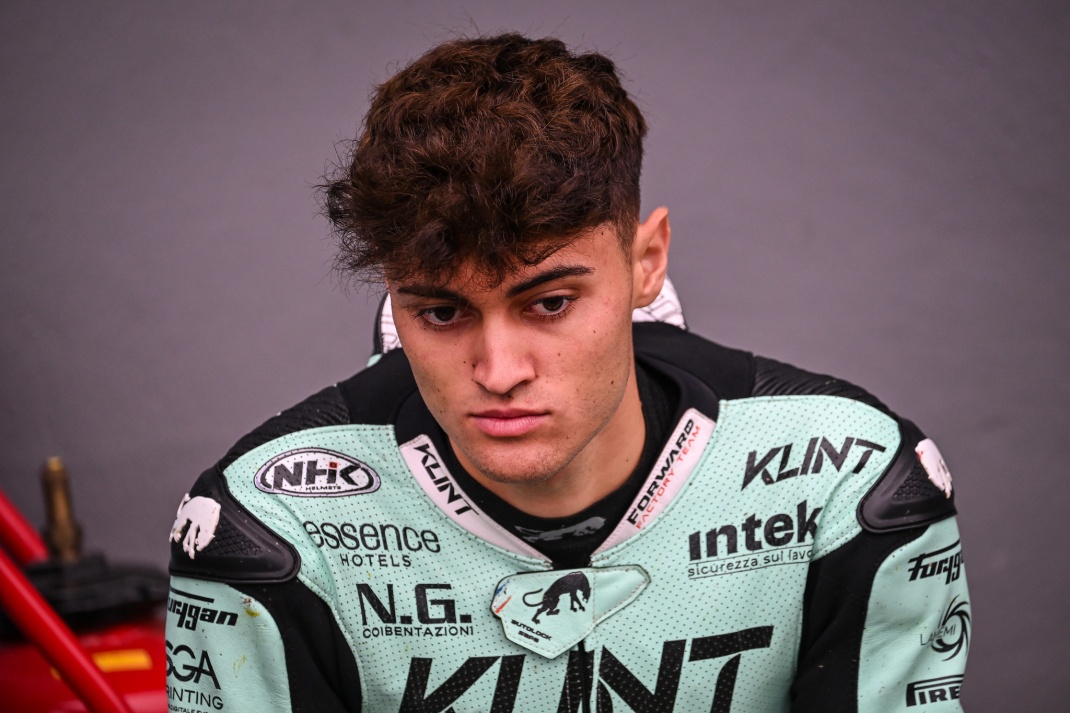
Álex Escrig’s career has so far been a true rollercoaster, alternating very positive years with moments where he hit rock bottom. What’s certain, however, is that the Valencia-born rider has never given up and has always responded to adversity by working hard to get back to the top, just like he's doing now in the World Championship with the Klint Forward Factory Team.
His stage as a Moto2 World Championship rider began in 2023 and has continued through injuries and various difficulties, plus the development of a new bike together with the squad owned by Giovanni Cuzari. Despite all this, there have been highlights, such as his 7th place finish in 2025 at Termas de Río Hondo, along with several Q2 appearances and point finishes with a motorcycle that is still a work in progress, compared to the more established Kalex and Boscoscuro machines.
Álex Escrig spoke with Palmen in Motorradsport about his time in the World Championship so far and his career, as he talked us through both the highlights and the darkest moments of his journey in motorcycle racing.
Álex, how is your third Moto2 World Championship season going?
So far it’s been a bit of a mixed year. We started quite strong, but then we kind of lost our way. I also had an injury at Le Mans, and from that moment it’s been harder to regain the feeling I had at the start of the season. Now we’re working to get that feeling back and return scoring good results.
We've seen some very good potential this year, especially with your 7th place in the Argentina GP.
I think a few things aligned in Argentina to make that result happen, because the weekend actually didn’t start well—I think I finished 26th on Friday. After the free practice sessions, we made some changes to the bike and on Saturday I felt good, started riding well, got a good feeling with the bike, and made a big step forward by getting into Q2, and then I did that great lap that put me fourth on the grid.
What surprised me most was that in the race I maintained a strong pace: after the first lap I was 14th, but then I managed to climb back to 7th. That was the positive part: we built up throughout the weekend. The truth is, we haven’t been able to repeat that level because, realistically, we’re not in a position to fight for the top 5 or top 7 every weekend. However, we’re working on being more consistently in the points. There are still a few details we need to sort out, and they would allow us to start from better grid positions.
Qualifying seems to be the weak spot at this stage.
Exactly, that’s what we’re missing right now. I’m always starting 21st, 19th, or even further back, and that makes the start of the race very tough. Usually, we’re pretty competitive in race pace, but we start too far back and that really penalises us.
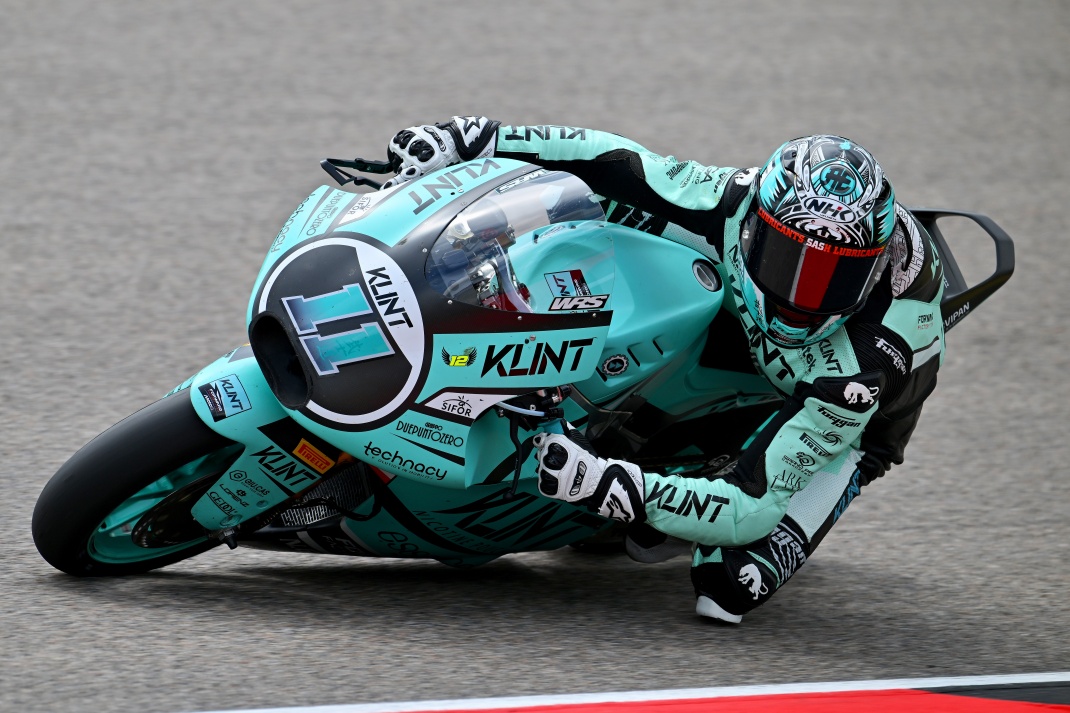
Let’s now take a step back to the last two seasons. Starting with 2023—how did you deal with the injury that kept you out for so long?
It was really frustrating. I came in with so much desire to race, having fulfilled the dream of competing in the World Championship, and missing so many races was a blow. I felt very prepared for the Forward project and had a lot of confidence in myself and what I could achieve. It was a very tough year. I was out with injury for around four months, and my first race at full fitness was Silverstone, after the summer break, where I fought for 17th place and finished not far from the points.
In Austria, during the second race, I injured my tibia again on Saturday morning while trying to get into Q2. The next races at full fitness only came in Asia, on circuits I didn’t know. Still in Sepang I scored points, and in Qatar I qualified directly for Q2. In a nutshell, it was a positive year considering the short time I spent on the bike, because I was quite fast in the few races I did. But, on the other hand, I ended the season with a lot of frustration for not being able to show my true potential.
2024 looked promising, but things turned out differently.
I’d sum up 2024 as more of a mental challenge. With the switch to Pirelli tyres, a new aluminium chassis, and a completely new crew, too many changes came all at once and that prevented us from being competitive. The bike was new, the tyres too, so we didn’t know what the bike needed or what the tyres needed. Rather than coming to race, it felt like we were there to test and figure out what direction to take. At the same time, I must say that such situation helped us understand the bike better and be a little more competitive in 2025. We’ve managed to reach Q2 a few times and get some good results. Now we just need to find consistency.
Before arriving in the World Championship, you had excellent results in the European Stock 600 and Moto2 classes within JuniorGP, but things aren’t going the same way now. How are you dealing with that?
It’s obviously tough, because we’re here to win. It’s true that the goal is to reach the World Championship, but once you're there, you want to win. Reaching that level and not getting the expected results is very challenging mentally: you have to reset your goals and aim for different targets. In our case, we’re in a development phase, so the goal each weekend isn’t to win the race, but to get as far forward as possible and find what we need to be better at the following GP.
You're not just a rider but also somewhat of a test rider. How do you deal with that dual role?
It’s definitely more complex because you’re not only thinking about racing, but also about improving the package. And we’re limited in terms of development, as we have to wait for upgrades to arrive. That’s the downside of a project under construction. Others already have a well-developed bike and can just focus on competing, while we’re developing during race weekends, and that takes away from our performance. In 2025 though, we’re trying to do most of the development outside of the races, so we can be more competitive during the GPs.
Looking back at your JuniorGP seasons, what can you tell us about 2021 and 2022, where you really stood out?
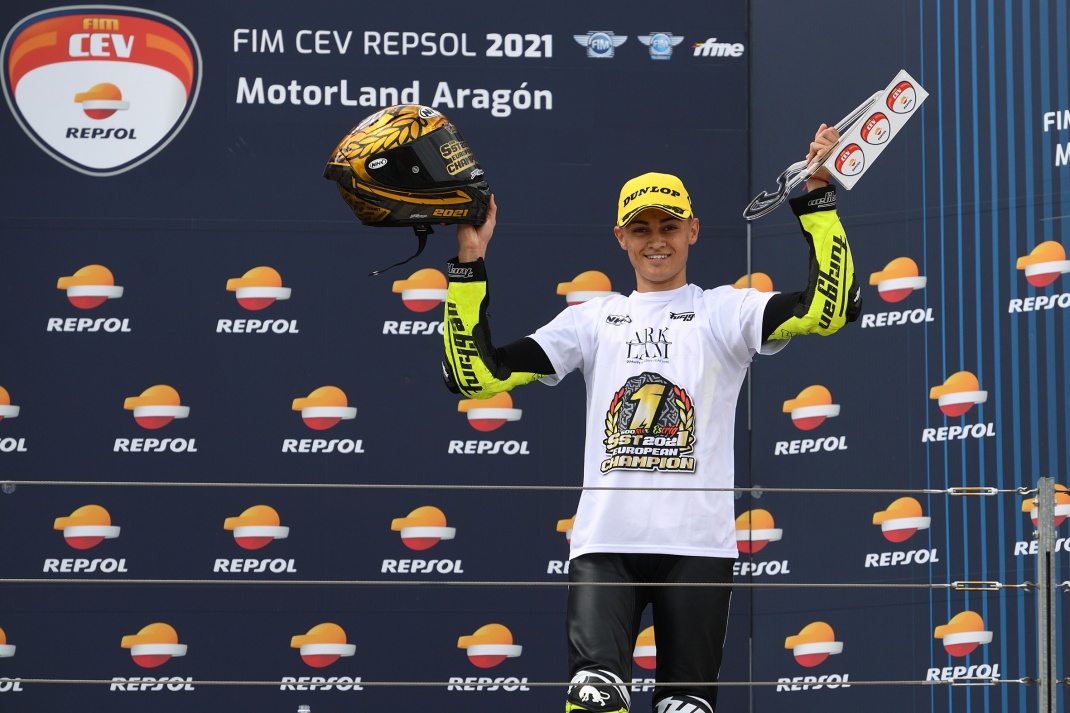
Those two years gave me confidence in myself. It all happened very quickly. 2021 was my first time in JuniorGP, in the Stock 600 category with a bike I had never ridden. It was my first time on a “big” bike—the Yamaha R6 with the Fau55 team (Héctor Faubel’s team, ed)—and I was immediately fast. I came from a mentally tough year in the Red Bull MotoGP Rookies Cup, so that experience helped me grow, regain confidence, and prove my speed.
I won the Stock 600 title in 2021, and in 2022 I moved up to European Moto2 with Stylobike. As a team, we also had to grow because we didn’t have the technical data other teams like IntactGP with Lukas Tulovic had. But despite the difficulties, we showed a great level of performance. I missed three races due to injury, but we were competitive, won races, and I finished third just a few points behind the rider in second place (Senna Agius, ed).
Let’s go even further back... How did your journey in motorcycle racing begin?
One day my parents bought a bike for my sister, and I, as the jealous little brother, started riding it. My dad noticed I had potential. He didn't know much about bikes, but he saw I had skills and decided to take me to a riding school, KSB Sport. There they realised I seriously had potential, because when I was four years old, I was racing with six-year-olds and kids with more experience. From there, I’ve always made the most of every opportunity, step by step, until I got to where I am today.
Can you summarize your early seasons before reaching JuniorGP?
I only raced in regional championships in Valencia until 2014. That year, I did my first serious championship, which was the Cuna de Campeones with 140cc minibikes, and I won my first Spanish title. That gave me the chance to move to big circuits with an RMU 80 in a team from Valencia (Team MOMN, ed), and with them I was twice runner-up in Spanish 80cc Championship. Then I got noticed by the Aspar team, who gave me the chance to race in PreMoto3. The first year didn’t go great, but in the second I fought for the championship until the final round (he finished second, tied with Izan Guevara and behind Marcos Ruda, ed).
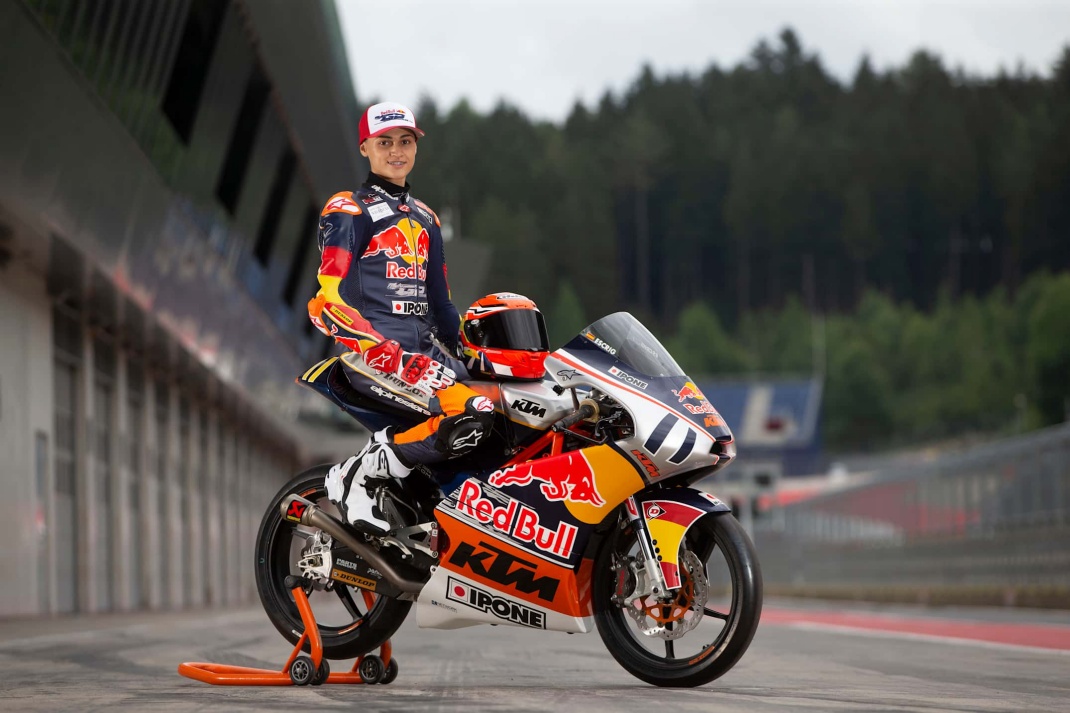
I was later selected for the Red Bull MotoGP Rookies Cup and raced there for two years. In the first year, I got a few poles and podiums, which was not exactly what I hoped for, but I learned a lot. The second year, in 2020, was very tough: I wanted to fight for the title with Pedro Acosta, but I ended up nearly quitting racing. That winter I had to decide whether to continue or stop, and then I got the opportunity to ride with Fau55, which marked the beginning of my rebirth.
So you really were about to quit?
Yes, because at that moment I didn’t see myself in Moto3, because of my height and self-confidence issues. I didn’t believe in myself and convinced myself I wasn’t good enough. I had to mentally reset, and thankfully I did.
What exactly happened in 2020?
As mentioned, I was aiming to win the Rookies Cup against Pedro Acosta. But in the first four races in Austria, between penalties, crashes, and lack of focus, things didn’t go my way. I was very fast, but the races were a disaster: I only scored four points, while Pedro had 100 points after winning all four races.
I had the feeling that winning was the only way to get to the World Championship, and when that goal slipped away, I felt I was not good enough. I mentally collapsed and went from being one of the two top riders to qualifying last at Aragon. I didn’t want to race anymore. After that season, I decided to give myself one last chance. I worked with Faubel and with some psychologists, and from that moment, I became a different person.
Fortunately, you came out stronger. But I also remember that in 2020 you raced in the CIV Moto3…
Yes. That was mainly training, but it was important to get more mileage for myself and to help BeOn develop their 450cc Moto3 bike. The bike was heavily restricted in terms of power, because it was too strong compared to the regular 250cc Moto3 bikes, but it was still an important experience.
And now, when you look back at everything you've experienced, either positive or negative, and realize you're in the World Championship...how do you feel?
In the end, I can be proud. I achieved what I dreamed of as a kid: reaching the World Championship. But often we don’t live in the present, because we’re always thinking about the future and wanting more. Today, my focus is to win races and have the chance to do so. If I stop and reflect, I’m happy with what I’ve achieved, especially because I haven’t always had the ideal opportunities, but I believe I still have a lot of potential to show. And that’s the only thing on my mind: proving everything I’m capable of.
All in pursuit of your dream, which I imagine is MotoGP.
Exactly. I have short-term goals, but obviously I’d be lying if I said I didn’t want to become MotoGP World Champion. That’s the top dream.
Before we close, would you like to share your main strength and the area where you feel you can still improve?
My weak point is managing group battles. When the race pace is slow and there are a lot of riders around, I struggle more. On the other hand, my strength is understanding what I need to be fast: I know my potential and what I need to fully release it. That awareness is my current main strength.
And finally, who would you like to thank for everything you’ve lived, are living, and will live as a rider?
If I’m here today, it’s because my parents have always supported me. No rider, no matter how talented, would be here without their parents. So first and foremost, I thank them. And then I thank the people who helped me rise to the next level: my psychologist, trainer, nutritionist, and some close friends of mine.
Palmen in Motorradsport thanks Álex Escrig for his availability and also Martina Cuzari and Matteo Malnati of the Klint Forward Factory Team for making this interview possible. Best wishes to the rider and team for the upcoming races and seasons.